What Is Barcode Inspection and Why Is It Important?
A barcode may look like a few dark lines, yet it carries critical information about a product. Barcode Inspection is the process of checking whether that code can be scanned, decoded, and traced reliably. It examines print contrast, bar width, spacing, damage, and placement. Small defects matter.
A blurred symbol on a medicine carton can delay identification. A poorly printed label on a warehouse box can interrupt sorting, shipping, or inventory updates. In practice, inspectors use scanners, cameras, and verification software to compare printed codes with required quality standards. GS1’s former president and CEO Miguel A. Lopera described the barcode as “the language of business.” That language must remain clear.
Barcode Inspection also supports quality teams before products leave the production line. It can reveal ink spread, missing bars, weak contrast, or incorrect data. Early detection reduces rework and protects customer confidence. It also creates useful evidence for process improvement. The result is not merely a readable barcode. It is a more dependable link between products, machines, workers, and records.
Still, inspection is not magic. A perfect grade does not guarantee that every operational problem disappears. Camera alignment, lighting, software settings, and human decisions can affect results. This is where practical experience becomes valuable. Teams should review failed scans, test real packaging, and question their assumptions. A strong Barcode Inspection program combines reliable equipment, trained operators, documented procedures, and continuous review. That approach makes traceability clearer, even when production conditions change.
What Is Barcode Inspection?
What Is Barcode Inspection?
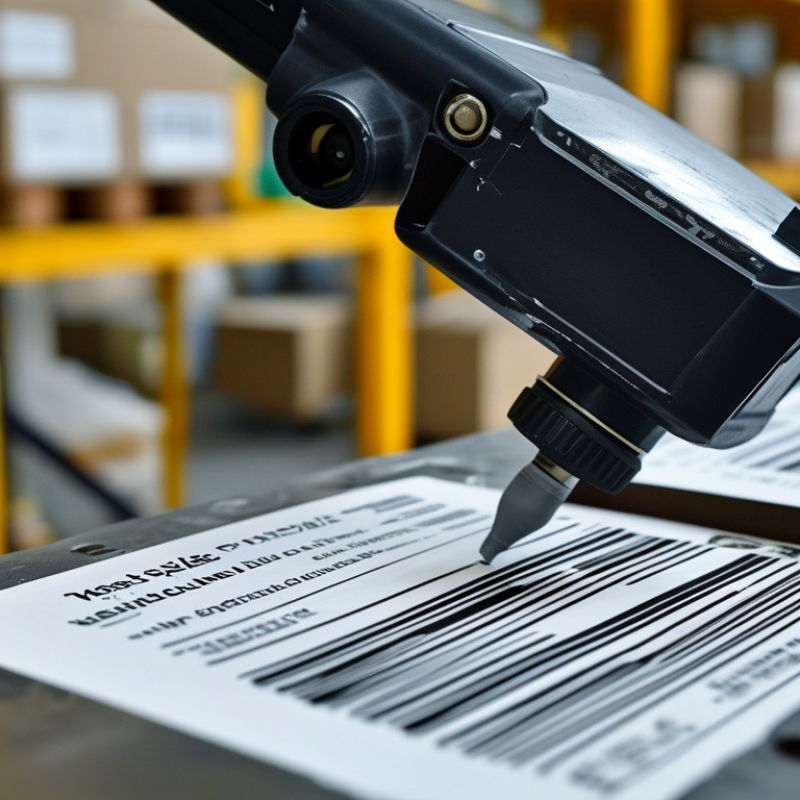
Barcode inspection is the process of checking whether a barcode is printed clearly, encoded correctly, and easy for scanners to read. It goes beyond simply scanning a symbol. A scanner may decode a damaged barcode once, while an inspection system measures its quality under controlled conditions. It can examine contrast, spacing, quiet zones, print defects, and alignment. The result is often a quality grade and a record of the tested symbol. This evidence helps production teams identify problems before products leave the line.
In practice, inspection may use a camera, calibrated lighting, and software based on recognized barcode standards. The system compares the printed pattern with the expected data, such as a lot number or product identifier. Small details matter. A faint edge, ink spread, or wrinkled label can create repeated failures. Reflective packaging can also confuse a camera. Not perfect.
Good inspection combines technology with human review. Operators should understand why a symbol failed, rather than only remove it from the line. Regular checks of focus, lighting, printer settings, and sample labels improve reliability. Yet inspection systems can miss unusual damage or poorly chosen test conditions. That weakness deserves attention. A barcode that works in a quiet factory may fail under different angles, motion, or lighting. Careful verification makes barcode quality more consistent and supports accurate tracking through storage, handling, and delivery.
What Is Barcode Inspection and Why Is It Important?
| Inspection Dimension | What It Measures | Applicable Barcode Type | Typical Result or Reference | Why It Matters |
| Decode Verification | Confirms that the symbol can be decoded and that the returned data matches the intended content. | Linear and two-dimensional barcodes | Pass when the symbol decodes correctly and the data string is accurate. | Prevents incorrect identification, traceability errors, and failed automated processing. |
| Symbol Contrast | The difference in reflectance between the light and dark areas of a barcode. | Linear and two-dimensional barcodes | Reported as a percentage or grade according to the relevant ISO/IEC verification standard. | Insufficient contrast can make a barcode difficult or impossible for scanners to read. |
| Minimum Reflectance | The lowest measured reflectance within the barcode symbol. | Linear and two-dimensional barcodes | Compared with the maximum reflectance to evaluate sufficient light-to-dark separation. | Helps identify printing or substrate conditions that reduce scan reliability. |
| Modulation | The consistency of reflectance differences across individual barcode elements. | Primarily linear barcodes; related measurements are also used for 2D symbols. | Evaluated as part of ISO/IEC print-quality grading. | Detects uneven ink, inconsistent bars or spaces, and low-quality printing. |
| Defects | Unwanted spots, voids, scratches, or irregular areas within bars, spaces, or modules. | Linear and two-dimensional barcodes | Measured and included in the overall symbol-quality grade. | Reveals damage that may cause intermittent or orientation-dependent scanning failures. |
| Decodability | How accurately the printed dimensions match the symbology's required widths and relationships. | Linear barcodes | A graded parameter under ISO/IEC 15416. | Identifies bar-growth, narrow-space, and dimensional-printing errors. |
| Axial Nonuniformity | Variation in the overall scale of a two-dimensional symbol along one axis. | Two-dimensional barcodes | Evaluated under ISO/IEC 15415. | Finds stretching or compression caused by printing, labeling, or application equipment. |
| Grid Nonuniformity | Deviation of the printed modules from their ideal grid positions. | Two-dimensional barcodes | Evaluated under ISO/IEC 15415. | Detects distortion caused by curved surfaces, poor registration, or printing movement. |
| Fixed Pattern Damage | Damage or degradation affecting position, timing, or alignment patterns in a 2D symbol. | Two-dimensional barcodes | Evaluated under ISO/IEC 15415. | Protects the structural features required for reliable symbol location and decoding. |
| Overall Symbol Grade | A combined assessment of multiple print-quality measurements. | Linear and two-dimensional barcodes | ISO/IEC grading commonly uses a numeric scale from 4.0 to 0.0, corresponding broadly to grades A through F. | Provides an objective quality benchmark instead of relying only on a single successful scan. |
| Quiet Zone and Symbol Format | Checks the required blank margins, dimensions, orientation, and structural format of the symbol. | Linear and two-dimensional barcodes | Requirements vary by symbology and application specification. | Ensures scanners can locate the symbol and distinguish it from surrounding text or graphics. |
Reference standards: ISO/IEC 15415 is commonly used for the print-quality evaluation of two-dimensional symbols, while ISO/IEC 15416 is used for the print-quality evaluation of linear barcodes. Acceptance requirements should always be matched to the applicable symbology, scanning environment, and customer specification.
How Does Barcode Inspection Work?
What Is Barcode Inspection and Why Is It Important?
How Does Barcode Inspection Work?
Barcode inspection begins when a printed code enters a controlled scanning area. A camera captures the symbol under steady lighting. The system checks its position, contrast, spacing, and overall shape. It then decodes the pattern into readable information. A clear image is essential. Glare, wrinkles, dust, or weak ink can hide small details.
The decoded data is compared with the expected product information. For example, a package may need to match a specific item number or production batch. The software also evaluates print quality, not only whether the code opens successfully. A code can scan once and still fail repeatedly on another scanner. That difference matters. Inspection systems may trigger an air jet, belt diverter, or line stop when a defect appears. Operators can review the image and record the reason for rejection.
Accuracy depends on setup and maintenance. Lighting must suit the material, and the camera needs stable focus. A reflective wrapper may create bright patches that look like missing bars. Poor alignment can produce false rejects, while loose settings may allow unreadable codes through. Regular calibration, test samples, and documented checks improve reliability. Human review remains useful when the system reports an uncertain result. No inspection process is perfect, especially when packaging changes without a proper validation run.
Which Barcode Defects Can Inspection Detect?
Barcode inspection is more than checking whether a symbol looks dark and clear. It measures defects that scanners may expose under real warehouse conditions. ISO/IEC 15416 evaluates one-dimensional barcodes through multiple scan profiles and assigns grades from A to F. ISO/IEC 15415 applies similar quality principles to two-dimensional symbols. These grades consider contrast, modulation, edge definition, decodability, and defects.
Inspection can detect quiet-zone violations, uneven bar widths, missing bars, ink spread, voids, and poor print contrast. It can also reveal damage from wrinkles, condensation, abrasion, or curved packaging. A small white gap inside a black bar may look harmless. It can still disrupt decoding. Reflective film creates another problem: the code appears readable to people but fails under a scanner’s angled light. GS1’s General Specifications identifies adequate quiet zones and symbol contrast as essential conditions for reliable scanning. The details are easy to underestimate.
For 2D codes, inspection can identify cell growth, cell shrinkage, finder-pattern damage, low contrast, and excessive print distortion. It also checks whether data remains decodable after damage correction. That does not make poor printing acceptable. A code that scans once may fail after handling. Practical inspections should test samples from different printers, shifts, materials, and production speeds. This approach follows the measurement principles in ISO/IEC 15416 and ISO/IEC 15415, rather than relying on visual approval alone. Human review still matters, but it is inconsistent. That weakness deserves attention.
Where Is Barcode Inspection Used?
Barcode inspection is used wherever a code carries product, safety, or tracking information. In factories, cameras check printed symbols before products leave the line. They detect missing bars, weak contrast, smudges, and incorrect spacing. A line may run quickly, making manual checks difficult. This prevents many small errors.
Warehouses use inspection at receiving stations and packing tables. Workers can confirm that cartons match digital orders before shipment. In retail, scanners and vision systems check shelf labels, package codes, and price accuracy. Logistics centers inspect parcels as they move through sorting equipment. Inspection also helps identify duplicate or unreadable labels. Small errors matter.
Food and beverage facilities inspect codes for traceability and production dates. Healthcare packaging uses verification to reduce mix-ups between similar packages. In both settings, clean printing and accurate data are essential. Reliable systems combine cameras, lighting, software, and trained operators. Human review still matters. A dirty lens can produce false failures, while poor lighting can hide defects. Operators sometimes trust automated results too much. That assumption needs regular testing, calibration, and thoughtful review.
What Is Barcode Inspection and Why Is It Important?
Barcode inspection verifies whether a printed or marked symbol can be decoded reliably and meets applicable quality requirements. It is commonly used during printing, packaging, production-line checks, warehouse receiving, shipping, retail scanning, healthcare identification, and pharmaceutical traceability.
ISO/IEC Barcode Quality Grade Thresholds
ISO/IEC 15415 for two-dimensional symbols and ISO/IEC 15416 for linear symbols use a quality score from 0.0 to 4.0. The chart shows the minimum score boundary for each grade: A starts at 3.5, B at 2.5, C at 1.5, D at 0.5, and F represents scores below 0.5. Higher grades generally indicate stronger print quality and a greater likelihood of successful scanning across inspection and usage environments.
Why Is Barcode Inspection Important?
Barcode inspection checks whether a printed or marked code can be scanned accurately. It also confirms whether the encoded data matches the product record.
Why is barcode inspection important?
A small printing defect can stop a package at checkout or disrupt warehouse tracking. Poor contrast, damaged bars, missing quiet zones, and uneven spacing often cause scanning failures. These problems may look minor to the human eye. Scanners are less forgiving.
In production environments, inspection equipment measures symbol quality using recognized grading methods. It checks readability, contrast, modulation, defects, and data structure. The process can also compare the scanned code with an order number, batch record, or expiry date. That extra check helps prevent product mix-ups and supports reliable traceability.
The practical benefits appear across the supply chain. Workers spend less time typing numbers manually. Warehouses reduce misplaced inventory. Retail teams face fewer rejected items. Accurate records also make targeted recalls more manageable when a genuine issue occurs. However, inspection is not flawless. Dust, curved surfaces, glare, vibration, and poor lighting can affect results. Human review still matters when a borderline code passes or fails unexpectedly.
A dependable program needs regular calibration, clean printing equipment, and documented inspection settings.
Operators should investigate repeated failures instead of simply lowering the acceptance threshold. Cheap fixes can create expensive data problems later.
Small errors matter.
