Choosing the right water filled flood barrier is not a simple shopping decision. It is a practical risk assessment.
Global buyers face different flood conditions, ground surfaces, storage limits, and emergency response times. A barrier that performs well on flat concrete may struggle on grass, gravel, or uneven roads. Product claims also need careful checking.
Professor Hannah Cloke, a respected flood-risk expert, said, “Floods are natural, but disasters are not.” Her observation gives this guide a clear purpose: effective preparation depends on informed decisions, not dramatic promises.
This introduction to the 10 Best Water Filled Flood Barriers for Global Buyers examines useful details. These include barrier height, filling time, stability, connection design, drainage performance, storage needs, and reuse potential. We also consider whether instructions are clear for workers under pressure.
Small details matter.
A weak valve can delay deployment. Poor packaging can damage the fabric before use. A heavy, wet barrier may require equipment that smaller buyers do not have. These practical weaknesses are easy to miss in product photographs.
The selected options should be viewed as tools, not complete flood protection systems. Site surveys, drainage planning, local warnings, and professional advice still matter. No barrier can guarantee safety in every flood event.
Some rankings may remain debatable. That is honest. Buyers should compare specifications, test procedures, warranty terms, and independent user experience before purchasing. This guide aims to provide a reliable starting point for municipalities, contractors, property managers, and households preparing for real water-related threats.
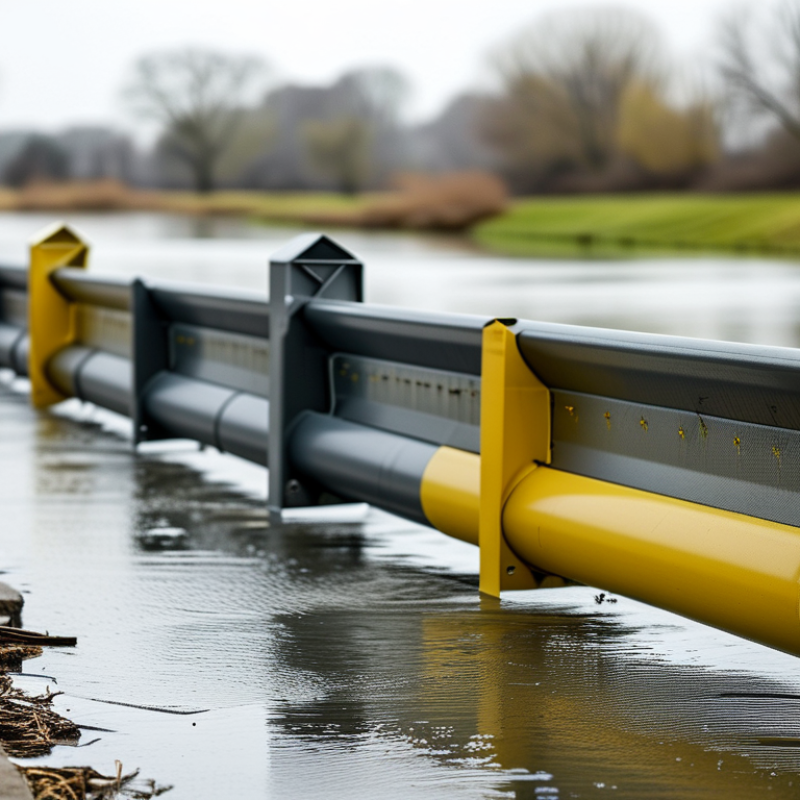
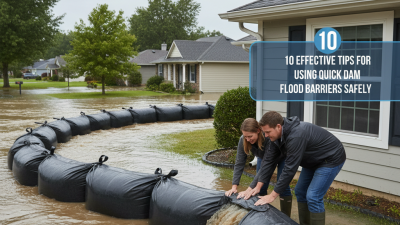
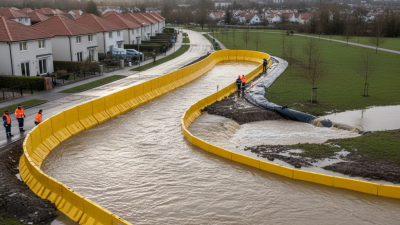
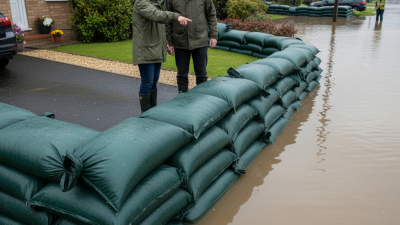
Water-filled flood barriers use ordinary water as temporary ballast. Their outer sleeve expands as it fills, creating a long, weighted tube. Water pressure adds stability, while the barrier’s broad base increases friction against the ground. Connected sections can form a continuous wall around doors, loading bays, roads, or low industrial entrances.
These systems are used near homes, warehouses, construction sites, farms, tunnels, and event grounds. They can also protect temporary access routes during heavy rainfall or river overflow. However, they are not magic. Fast-moving water, sharp debris, uneven soil, and rising groundwater can reduce their performance. A barrier may look secure while water quietly passes beneath it. Site assessment matters more than appearance.
Tips: Measure the protected length before purchase. Check filling points, connection strength, storage space, and drainage conditions. Place the barrier on clean, compact ground, then inspect it during use. Small gaps can become serious leaks. Follow tested installation guidance and local flood-control requirements. In practice, setup mistakes remain common, even with good equipment. After use, drain and dry each unit fully. Trapped moisture can cause odor, material damage, or unnoticed weakening before the next emergency.
For global buyers, evaluating water-filled flood barriers requires more than comparing height and price. Floods represented 44% of recorded disasters from 2000 to 2019, according to the UNDRR Global Assessment Report 2022. This exposure makes site suitability essential. Measure expected water depth, flow speed, ground slope, and available filling time before purchasing. A barrier designed for slow street flooding may fail beside a fast drainage channel.
Material performance deserves close inspection. Check resistance to puncture, ultraviolet exposure, abrasion, and repeated folding. Ask for independent test data, not only laboratory photographs. ISO 9001 certification can support manufacturing reliability, but it does not prove flood performance. Look for documented testing under controlled water pressure, including leakage rates and connection strength. Storage weight also matters. A unit that requires several workers and heavy vehicles may be impractical for remote buyers.
Logistics can quietly determine success. Water-filled systems usually need clean water, stable ground, and enough time to deploy. The WMO Atlas of Mortality and Economic Losses from Weather, Climate and Water Extremes reports over 2 million deaths and USD 3.64 trillion in losses between 1970 and 2019. Local emergency teams should inspect valves, seams, and packing condition before every season. I would not trust a “universal” barrier claim without local trials. Real sites are uneven. Small gaps can become serious failures.
The ten leading water-filled flood barriers differ sharply in setup speed, stability, and storage needs. Barrier One offers quick deployment for doorways and garage entrances. Barrier Two uses a wider base, improving resistance against shallow, fast-moving water. Barrier Three performs well on smooth concrete but may shift on loose gravel. Barrier Four is lighter, making transport easier for small teams. Barrier Five provides stronger side-by-side connections for longer property lines. Barrier Six has a compact folded profile, though filling takes more time. Barrier Seven suits repeated seasonal use with reinforced seams. Barrier Eight handles moderate flow well but needs careful anchoring. Barrier Nine offers good height and visible warning markings. Barrier Ten balances cost, capacity, and manageable handling.
Performance depends on more than water volume. Field experience shows that clean ground preparation prevents many failures. Remove stones, branches, and sharp debris first. Check the barrier’s fabric, valves, seams, and connectors before every deployment. A three-person team can usually position medium units more safely than one person. Leave overlap at corners. Small gaps can become serious channels. These products are temporary defenses, not replacements for drainage planning or emergency instructions. Their real performance may decline after ultraviolet exposure, rough folding, or repeated contamination. I would not trust a barrier solely because its stated height looks impressive.
Tips: Measure the protected edge before buying. Test one unit during dry weather. Mark the water line with chalk. Store barriers fully dry. Keep pumps, gloves, and sandbags nearby. Review local flood guidance, because site conditions can defeat even well-rated equipment.
Water-filled flood barriers demand careful installation, not just rapid filling. UNDRR’s Global Assessment Report 2022 states that floods represented about 44% of recorded disasters from 2000 to 2019. For global buyers, site readiness matters. Clear stones, branches, and sharp metal from the ground. Place the barrier on firm, level surfaces. Connect sections tightly, then fill them gradually. Check alignment after every section. Small gaps can become serious during rising water.
Storage determines future performance. Drain the unit completely and rinse away silt, salt, and chemicals. Dry it before folding. Store it in a cool, shaded room, away from rodents and ultraviolet light. Avoid tight bends around valves and seams. A dry barrier may still hide weak points. That is where many inspections fail. Mark the storage date and record previous flood exposure. Maintenance teams should examine punctures, seam separation, valve function, mold, and abrasion before every season. Temporary patching should never replace proper repair procedures.
Reusability depends on material, water quality, sunlight, and handling. It is not unlimited. Munich Re’s 2023 disaster review estimated global natural-disaster losses near US$380 billion, showing why reliable emergency equipment deserves documented care. Follow the supplier’s inspection limits and replace units showing brittle surfaces or repeated leakage. Use clean water when possible, because sediment can damage valves and increase drying time. Some buyers overlook training. A barrier stored perfectly can still fail when workers fill it unevenly or drag it across concrete. Field notes, photographs, and pressure checks make future decisions more reliable. Mistakes should remain visible.
| No. | Barrier Configuration | Typical Dimensions | Approx. Water Capacity | Installation Requirements | Storage Requirements | Maintenance Needs | Reusability | Best-Suited Applications | Main Considerations |
|---|---|---|---|---|---|---|---|---|---|
| 1 | Compact low-profile water tube | Approximately 3–5 m long; 15–20 cm high when filled | About 40–100 L per 3 m section | Place on a clean, level surface; connect sections and fill through the inlet; no specialist tools normally required | Drain fully, dry both sides, roll loosely, and keep away from rodents, sharp objects, and direct sunlight | Check seams, inlet caps, and abrasion points before and after use; remove mud and sediment | Usually suitable for multiple uses when the PVC or coated fabric remains undamaged | Doorways, garages, entrances, and minor surface-water diversion | Low height provides limited protection against deep or fast-moving water |
| 2 | Standard residential water barrier | Approximately 3–5 m long; 25–30 cm high when filled | About 150–350 L per 3 m section | Lay the barrier in the expected flow direction, overlap or link ends, and fill gradually to prevent shifting | Store dry in a ventilated area at moderate temperature; avoid compression that can crease welded seams | Inspect for punctures, UV damage, blocked drain valves, and leaking connectors; patch only with compatible repair materials | Commonly reusable for several flood events with proper drying and inspection | Residential driveways, patios, small shops, and temporary property protection | Requires adequate clean water and sufficient time to fill before flooding reaches the site |
| 3 | Heavy-duty linked tube system | Approximately 5–10 m long; 30–40 cm high when filled | About 350–800 L per 5 m section | Requires a prepared base, secure end stops, connected sections, and controlled filling to maintain alignment | Use pallets or shelving to keep units off concrete floors; store rolled or folded without sharp bends | Rinse after exposure to saltwater or chemicals; inspect all welds, lifting points, and valves | Highly reusable if the outer shell and internal baffles are not damaged | Warehouses, commercial buildings, loading areas, and longer perimeter lines | Heavy when filled and may require pumps or multiple hoses for rapid deployment |
| 4 | Multi-chamber stability barrier | Approximately 3–6 m long; 30–45 cm high when filled | About 250–650 L per 3 m section | Position chambers flat, fill in the recommended sequence, and secure the ends against lateral movement | Dry each chamber separately where possible; avoid folding while damp to reduce mold and odor | Check chamber-to-chamber connections and internal partitions for leaks or uneven filling | Good repeat-use potential because separate chambers can limit the effect of a small puncture | Uneven ground, building perimeters, and sites needing improved resistance to rolling | More filling points can increase setup time and require closer inspection |
| 5 | Wide-base commercial barrier | Approximately 3–5 m long; 40–60 cm high when filled | About 500–1,200 L per 3 m section | Needs a broad, debris-free footprint; use anchoring or end restraints where flow or slope may cause displacement | Requires substantial storage space when folded; keep heavy units supported to prevent deformation | Inspect the base fabric, welds, fill ports, and drain fittings; clean oil and industrial residue promptly | Suitable for repeated seasonal deployment when professionally inspected | Industrial yards, logistics sites, utility compounds, and commercial facilities | Provides greater depth but is difficult to move after filling and may need mechanical handling when drained |
| 6 | Rapid-deployment hose barrier | Approximately 5–15 m long; 20–35 cm high when filled | About 250–900 L per 5 m section | Unroll along the intended line, connect hoses, and fill progressively; a pump may reduce setup time | Compact when drained; coil without tight kinks and protect connectors from crushing | Flush sediment from hoses and inspect couplings, valves, and outer sleeves after each deployment | Generally reusable, although connectors and hose sections may need periodic replacement | Long straight runs, roadsides, agricultural land, and emergency response stockpiles | Less effective on sharp corners or highly irregular terrain unless designed with flexible joints |
| 7 | Door and gate threshold barrier | Approximately 1–3 m long; 10–20 cm high when filled | About 20–100 L per unit | Place directly across the threshold; clean the contact surface and use compatible joining pieces for wider openings | Can be stored in cabinets or containers after complete drying; protect from nails, glass, and sharp tools | Clean contact surfaces, check for pinholes, and test the closure or drain mechanism before storage | Suitable for repeated use in the same buildings if stored correctly | Retail entrances, basement doors, pedestrian gates, and small access points | Not intended to control broad flows or protect large open perimeters |
| 8 | Traffic and roadway diversion barrier | Approximately 3–5 m long; 25–40 cm high when filled | About 250–700 L per 3 m section | Deploy parallel to the roadway, use visible warning markers, and maintain safe clearance from traffic | Remove road grit before storage; use protective covers to prevent abrasion during transport and stacking | Examine the bottom surface for cuts caused by aggregate, asphalt edges, or vehicle contact | Reusable when traffic impact has not damaged the shell, welds, or restraints | Temporary road closures, drainage works, culverts, and floodwater channeling | Must be combined with compliant traffic-control equipment; it is not a substitute for crash barriers |
| 9 | Agricultural and field perimeter barrier | Approximately 5–10 m long; 20–35 cm high when filled | About 300–1,000 L per 5 m section | Clear stones, branches, and crop residue; use stakes or end anchors on sloping ground where permitted | Keep away from fertilizers, pesticides, livestock, and prolonged sunlight; store on a clean raised surface | Wash off soil and agricultural chemicals; inspect for animal bites, punctures, and sun degradation | Reusable for seasonal flood protection if contamination and abrasion are controlled | Fields, farm entrances, irrigation channels, greenhouses, and rural access roads | Requires a dependable water source in remote locations and may be vulnerable to vegetation-related punctures |
| 10 | Modular high-capacity perimeter system | Approximately 3–5 m per module; 45–60 cm high when filled | About 700–1,500 L per 3 m module | Requires site planning, multiple operators, substantial fill volume, and secure joining or anchoring at corners | Needs a dedicated dry storage area, lifting assistance, and protection from ultraviolet exposure and rodents | Perform documented inspections, clean and dry thoroughly, and replace damaged valves, straps, or panels | Designed for repeated emergency or seasonal deployment with scheduled inspection | Large facilities, critical infrastructure, flood-prone compounds, and long-term temporary protection | Highest water demand and handling burden in this table; site-specific hydraulic assessment is recommended |

Note: Dimensions, water capacities, setup times, and reuse cycles are practical industry ranges for generic water-filled barrier configurations. Actual performance depends on material construction, ground conditions, water depth, flow velocity, anchoring, climate, and the manufacturer’s installation instructions.
For global buyers, a water-filled flood barrier is more than a flexible wall. Its performance depends on material strength, ground conditions, filling speed, and correct installation. Look for reinforced fabric, sealed seams, UV resistance, and stable connections between units. The empty product should also be compact enough for efficient international shipping.
Ask for evidence. Request independent test reports, production quality records, material specifications, and conformity documents required in the destination market. These documents should identify test methods, water depth, leakage limits, and operating conditions. A certificate alone proves little if it covers another product or application. Safety instructions should explain anchoring, inspection, storage, and removal after flooding.
Supplier assessment requires practical questions. Can the factory provide batch traceability and replacement parts? Are dimensions checked before packing? Does the supplier offer installation training or clear diagrams in usable languages? Water changes everything. A barrier may pass a laboratory test but fail on mud, slopes, sharp gravel, or fast-moving water. Buyers should request site-specific advice and examine product samples before placing a large order. I would also compare lead times, packaging damage records, warranty terms, and communication during a simulated emergency. Perfect certainty is unrealistic, and rushing procurement can hide weak assumptions. A smaller trial order may reveal more than polished sales material.
Please enter the details to download, thank you
Get in Touch With Us
Please enter the details to download, thank you