
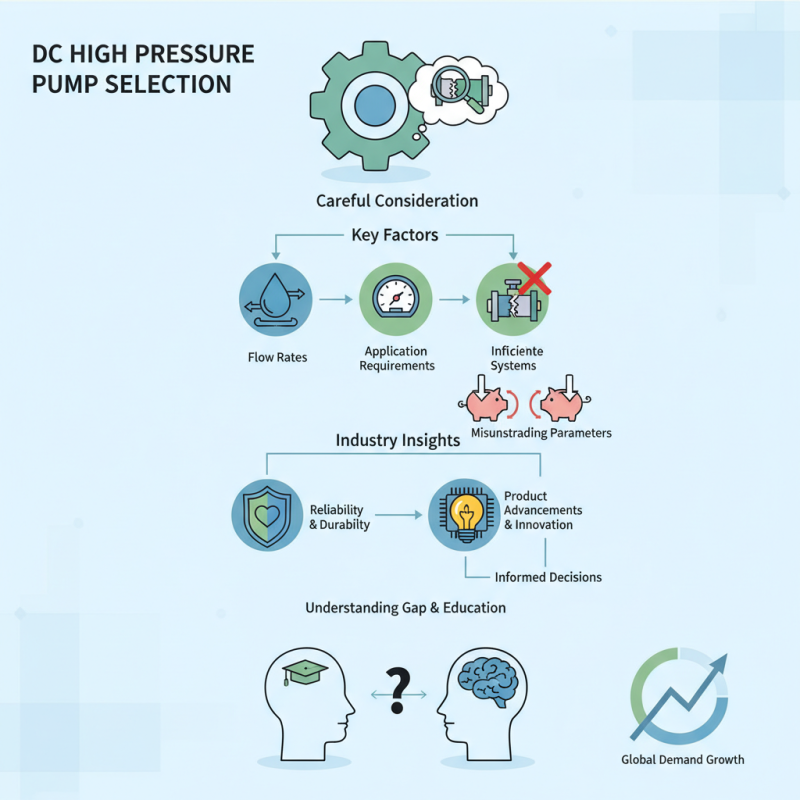
Choosing the right Dc High Pressure Pump requires careful consideration and expertise. These pumps serve critical applications in various industries, from automotive to industrial cleaning. According to a recent industry report by MarketsandMarkets, the global demand for high-pressure pumps is projected to grow at a CAGR of 5.7% from 2021 to 2026.
Many factors influence the selection process. Users must focus on flow rates, pressure needs, and application-specific requirements. Misunderstanding these parameters can lead to inefficient systems and increased costs. It's essential to embrace a thoughtful approach, as the right choice can improve performance significantly.
Industry experts emphasize the importance of reliability and durability in pump selection. Manufacturers are continuously innovating, so staying updated on product advancements is crucial. This knowledge can assist users in making informed decisions. However, a gap in understanding often exists among users, highlighting the need for education in this area.
DC high pressure pumps are essential in various industries, from automotive to agriculture. Understanding their basic functions is crucial for selecting the right model. These pumps operate on direct current (DC), providing high efficiency and reliability. Reports show that they can reach pressures exceeding 3000 psi, which is vital for tasks like high-pressure cleaning and fluid transfer.
When choosing a pump, consider the flow rate, which is often measured in gallons per minute (GPM). For instance, a pump with a consistent 5 GPM at 1500 psi can effectively handle demanding applications. However, be aware that higher flow rates may lead to increased wear and maintenance. The lifespan of these pumps can vary significantly based on usage and environmental conditions, typically ranging from 1000 to 4000 hours.
Another aspect to consider is power consumption. DC pumps are known for their energy efficiency, yet a poorly sized pump can lead to unnecessary energy costs. It's important to reflect on the system's requirements and avoid oversizing. A balance between pressure, flow, and energy use is critical for optimized performance. Analyze your operational needs carefully before making a decision; it can save time and money in the long run.
| Pump Type | Maximum Pressure (PSI) | Flow Rate (GPM) | Voltage (V) | Weight (lbs) | Application |
|---|---|---|---|---|---|
| Diaphragm Pump | 150 | 1.5 | 12 | 5 | Chemical Transfer |
| Gear Pump | 300 | 2.0 | 24 | 7 | Oil Transfer |
| Centrifugal Pump | 200 | 3.0 | 12 | 6 | General Purpose |
| Submersible Pump | 250 | 4.0 | 12 | 8 | Floodwater Removal |
| Piston Pump | 400 | 0.5 | 24 | 9 | High Pressure Cleaning |
When selecting a DC high pressure pump, it is crucial to identify your specific application requirements. Different industries utilize these pumps for varying purposes. In water treatment, for example, pumps need to handle high flow rates and pressures. Reports suggest that 40% of operational failures in these settings are caused by improper pump selection.
Your application dictates essential features. Consider flow rate, pressure, and medium type. High pressure pumps range from 100 psi to over 10,000 psi, depending on the task. For instance, in manufacturing, processes often demand higher pressure for optimal efficiency. Choosing a pump that matches these specs can be the difference between smooth operation and costly downtime.
Take time to analyze your specific needs. Some applications may only require a pump with moderate pressure. Others may necessitate robust, high pressure capabilities. Keep in mind, not all pumps are truly versatile. Reports show 30% of users encounter performance issues due to mismatched pump specifications. This underlines the importance of detailed requirement assessment before making a decision.
When selecting a DC high pressure pump, understanding key features is crucial. Look for factors like flow rate, pressure output, and efficiency metrics. A report by the Hydraulic Institute indicates that pumps with a flow rate of 1 to 100 GPM are standard in many applications. Efficiency can vary widely. Some pumps achieve over 80% efficiency, significantly reducing operational costs.
Material construction is another vital feature. Pumps made from stainless steel or reinforced plastics offer better durability and performance in various environments. It's common for industrial pumps to experience wear if not chosen correctly. Consider the operating temperature range as well; a pump rated for higher temperatures may cost more but can prevent failure in extreme conditions.
Lastly, integration capabilities with existing systems matter. Sensors and controllers, often included, enhance usability. However, ensuring compatibility with your setup requires careful review. If overlooked, it can lead to performance issues and increased maintenance. Assessing these key features offers a more informed decision, ultimately improving the reliability of your operations.
The bar chart above illustrates key features of DC high pressure pumps, including flow rate, power consumption, maximum pressure, weight, and noise level. This data can help you evaluate and choose the right pump for your specific needs.
Choosing the right DC high-pressure pump requires understanding its performance specifications and ratings. You need to evaluate several factors. First, consider the flow rate. This measurement indicates how much fluid the pump can move in a given time. A pump with a higher flow rate will fulfill high-demand tasks efficiently. However, if your project requires precision rather than speed, a lower flow rate might be suitable.
Another key aspect is pressure rating. It tells you how much pressure the pump can generate. Make sure this value aligns with your system’s requirements. A mismatch can lead to inefficiencies or even damage. Occasionally, users underestimate the necessary pressure, resulting in inadequate performance. Reflecting on your actual needs is crucial here.
Tips: Look into user reviews and performance tests. These insights often reveal real-world applications. Maintain an awareness of energy consumption as well. High efficiency saves costs in the long run. Also, consider the compatibility of the pump with your existing system. Ignoring this can lead to costly adaptations. Select a pump that fits well within your operational parameters for optimal results.
When selecting a DC high-pressure pump, budget considerations play a vital role. The initial cost is important, but long-term expenses matter more. Some pumps may cost less upfront but require more maintenance. Understanding these costs is key to a smart purchase.
Long-term maintenance can include labor, parts, and frequency of service. A pump that seems affordable may heighten these future costs if it's less durable. Regular maintenance ensures reliability. Skipping it can lead to costly breakdowns and repairs.
Research various models and their service records. Talk to professionals or experienced users for insights. This can reveal hidden expenses that aren't clear at first glance. Also, consider energy efficiency; a more efficient pump can save on power bills over time. Balancing initial cost against future expenses is essential for making a wise investment.
Please enter the details to download, thank you
Get in Touch With Us
Please enter the details to download, thank you