
Choosing the right Bulk Fibc Bag Suppliers is a practical decision, not a simple price comparison. A dependable supplier affects product safety, filling speed, storage stability, and shipment losses. One weak seam can leave powder across a warehouse floor. One unsuitable fabric grade can damage moisture-sensitive goods.
Grand View Research estimates that the global FIBC market reached approximately USD 6.8 billion in 2023 and may grow steadily through 2030. Smithers also identifies flexible bulk packaging as a continuing growth area, driven by chemicals, food ingredients, agriculture, and construction materials. These figures show opportunity, but they do not prove that every supplier deserves trust.
As FIBCA technical guidance repeatedly stresses, “FIBC safety is a system, not a single feature.” This principle is closely associated with FIBCA technical specialists, including former technical committee contributors who emphasize design, testing, handling, and user training together. The wording may sound obvious. It is still often ignored.
A serious supplier should provide traceable material specifications, production records, test certificates, and clear information about safe working load. Ask about fabric strength, liner construction, discharge options, UV protection, and dust-control performance. Request samples before placing a large order. Then inspect stitching, lifting loops, seams, and dimensions by hand.
The cheapest quotation can become expensive after rejected loads, damaged pallets, or delayed production. However, premium pricing alone proves little. Buyers should compare evidence, not promises, and review supplier performance against their own operating conditions. That step is sometimes missed.
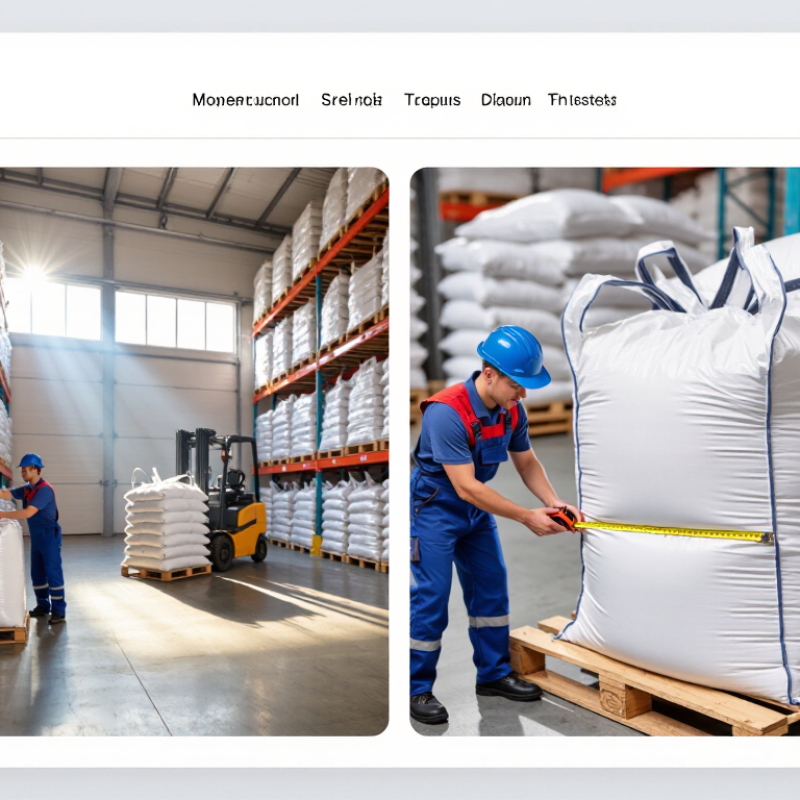
Before comparing bulk FIBC bag suppliers, define what the bag must do. Record product weight, bulk density, particle size, flow behavior, and moisture sensitivity. A 1,000-kilogram rating is not enough. Filling method, lifting equipment, storage height, and transport distance also affect the specification. Measure the pallet footprint and discharge clearance. Small mismatches create damaged corners or slow unloading. Keep it practical.
Select fabric construction from actual conditions, not a catalog image. Powdery products may need a liner or tighter weave. Outdoor storage may require UV protection and a suitable cover. Static-sensitive materials require a professionally reviewed grounding design and documented testing. Specify four lifting loops, corner loops, or another handling style based on your forklift and hoist. Confirm safe working load, safety factor, seam quality, and inspection records. Ask for samples.
During supplier evaluations, test a filled bag under normal handling conditions. Watch how the loops sit, how the base opens, and whether dust escapes at seams. I have seen a technically correct bag fail because the discharge spout was too short. That mistake was ours, not the factory’s. Recheck dimensions with operators before placing a bulk order. Request drawings, material data, batch traceability, and clear quality criteria. A specification should describe the real work, including awkward steps people usually forget.
Define your FIBC bag requirements by checking the material’s representative bulk density first. The chart shows the approximate filled mass for a 1 m³ FIBC, helping you compare the required safe working load (SWL), bag construction, liner selection, filling method, and discharge design.
Representative bulk-density values: flour ≈550 kg/m³, plastic pellets ≈600 kg/m³, sugar ≈800 kg/m³, and cement powder ≈1,440 kg/m³. Actual density varies with particle size, moisture, compaction, and filling conditions. Select an SWL above the expected filled mass and confirm the required safety factor and handling conditions with the supplier.
Choosing a bulk FIBC bag supplier requires more than comparing unit prices. Ask for documented material specifications, batch records, and recent test reports. Polypropylene fabric should have consistent weave density, clean seams, and lifting loops without fraying. Request samples from different production batches. One sample can hide variation.
Material claims deserve careful checking. The OECD’s Global Plastics Outlook (2022) reports that only 9% of global plastic waste was recycled in 2019. Therefore, recycled-content claims should include percentages, source details, and performance testing. For food, pharmaceutical, or sensitive industrial applications, request migration testing and traceability records. A certificate alone is not proof. Review its scope, issue date, and testing laboratory.
Manufacturing controls reveal supplier reliability. Check whether the factory operates an ISO 9001 quality system and manufactures bags according to ISO 21898 requirements. Ask how workers inspect seam strength, loop attachment, liner sealing, and safe working load markings. Factory visits can expose practical details, such as dusty storage areas or mixed batch labels. Do not ignore them. Independent testing should verify dimensions, load capacity, drop resistance, and electrostatic properties when relevant. Even experienced buyers sometimes overvalue impressive paperwork. A clear corrective-action process matters more than polished brochures. Small inconsistencies deserve investigation before a large order.
How to Choose the Best Bulk FIBC Bag Suppliers?
Certification should be checked before price. ISO 21898 covers FIBC design, performance, and testing requirements. Ask for current certificates, test reports, and batch traceability records. For food-contact applications, request migration documentation and manufacturing hygiene controls. Grand View Research estimated the global FIBC market at about USD 6.5 billion in 2023, with annual growth above 6% through 2030. This growth increases supplier choices, but paperwork quality still separates reliable factories from weak ones.
Customization must match the filling line, not just the sales drawing. Confirm bag dimensions, safe working load, fabric weight, lifting loops, liner type, discharge spout, and printing accuracy. Antistatic performance may also matter in dusty industrial environments. Request a physical sample and test it with your actual material. A perfect sample can still fail during automated filling. That is an uncomfortable lesson.
Lead time needs evidence. Ask for sample timing, production capacity, raw-material availability, inspection steps, and shipping schedules. A practical supplier may offer samples within 7–14 days and bulk production within 25–45 working days, depending on specifications and order volume. Require written milestones rather than a single delivery promise. Leave a buffer for artwork changes and failed inspections. The 2024 Smithers flexible packaging outlook also highlights continuing pressure on supply chains and material costs, so the cheapest quotation may not deliver the lowest total cost. Supplier audits, reference checks, and small trial orders remain useful, even when they slow purchasing slightly.
Choosing the best bulk FIBC bag supplier requires more than comparing the lowest unit price. Request a detailed quotation with bag size, fabric weight, coating, lifting loops, and testing fees. A cheaper bag may use lighter fabric and fail during repeated handling. That mistake is expensive.
Check the minimum order quantity before planning production. A low MOQ supports trials, but the unit cost may rise. A high MOQ can reduce pricing, yet it may leave you with unused inventory. Ask whether the supplier can provide samples from the same production line. Sample quality can differ from mass production. I have seen this happen.
Logistics deserve equal attention. Confirm production time, packaging dimensions, loading capacity, export documents, and delivery terms. Ask for milestone updates, not vague promises. Customer support should answer technical questions clearly and record agreed specifications. Test their response before placing an order. Send a detailed inquiry and measure the reply time.
Tips: Compare three written quotations. Calculate the landed cost, not only the bag price. Check how damaged goods are handled. Request inspection records when applicable. Keep one approved sample for future comparison. Do not assume urgent orders will receive priority. Put every change in writing. A supplier who communicates well may still make occasional errors, so build in inspection time and a realistic delivery buffer.
| Supplier Profile | Typical Application | Standard Bag Specification | Indicative FOB Price per Bag | Minimum Order Quantity | Production Lead Time | Sample Availability | Quality and Compliance | Logistics Capability | Customer Support | Best Fit |
|---|---|---|---|---|---|---|---|---|---|---|
| Profile A Large-Scale Manufacturer | Minerals, chemicals, construction materials | 90 × 90 × 110 cm; 1,000 kg SWL; 5:1 safety factor; coated polypropylene; 4 lifting loops | US$1.35–1.75 | 10,000–20,000 bags | 30–45 days after artwork and deposit approval | Paid sample; usually 7–10 days | Batch inspection, load testing, and standard export documentation available | Suitable for full-container shipments; export packing commonly available | Dedicated account contact; routine production updates | Lowest unit cost for large orders |
| Profile B Mid-Size Export Supplier | Food ingredients, grains, powders, and agricultural products | 90 × 90 × 120 cm; 1,000 kg SWL; food-contact fabric option; sift-proof seams | US$1.55–2.10 | 3,000–5,000 bags | 25–40 days | One paid sample; sample charge may be credited against an order | Material certificates and food-contact documentation available when specified | Can arrange port delivery, container loading, and standard export documents | Responsive email support; artwork and specification review included | Balanced price and flexibility |
| Profile C Custom-Order Specialist | Hazardous or sensitive powders requiring tailored construction | Custom dimensions; liner option; duffle or spout closure; UN-style construction available where applicable | US$2.20–4.80 | 500–2,000 bags | 35–55 days, depending on testing and customization | Prototype or pre-production sample commonly available | Additional seam, fabric, discharge, and performance testing may be arranged | Best for planned shipments; custom packaging may increase cubic volume | Technical consultation, drawing approval, and change-control support | Complex specifications and lower volumes |
| Profile D Regional Stock Distributor | Urgent replacement bags and standard industrial handling | Common stock sizes; unprinted or standard printed bags; 500–1,000 kg SWL | US$2.80–5.50 | 100–500 bags | 2–10 business days when stock is available | Usually available from local inventory | Documentation depends on the original manufacturing batch | Domestic or regional delivery; faster dispatch but higher freight per bag | Phone and email support during local business hours | Fast replenishment and small orders |
| Profile E Certified Food-Grade Supplier | Flour, starch, sugar, seeds, and other food ingredients | Food-contact polypropylene; clean-room or controlled packing option; liner available | US$1.90–3.20 | 1,000–3,000 bags | 30–50 days | Paid sample with cleanliness and material documentation | Food-contact declarations, traceability records, and cleanliness controls available by agreement | Export cartons or pallet loading available; container planning required for bulky liners | Documentation assistance and pre-shipment quality communication | Regulated food-handling applications |
| Profile F Flexible Regional Exporter | Recycling, waste collection, fertilizer, and general bulk handling | 90 × 90 × 100 cm; 500–1,000 kg SWL; standard four-loop design | US$1.70–2.60 | 1,000–3,000 bags | 20–35 days | Standard sample generally available within 5–7 days | Basic inspection reports available; independent inspection should be requested for critical loads | Suitable for mixed or partial-container orders; freight should be quoted separately | Flexible communication and moderate customization support | Small and medium recurring orders |
Choosing the best bulk FIBC supplier starts with evidence, not a polished website. Ask for a recent factory audit report. Check who conducted it, what was inspected, and whether findings were corrected. An independent audit should cover production capacity, worker training, traceability, stitching controls, and storage conditions. During a visit, inspect cutting tables, sewing lines, and finished bags under normal production pressure. Clean floors help, but documented controls matter more. Ask again.
Samples should match the specification you will purchase. Measure dimensions, fabric weight, liner fit, lifting loops, and discharge spouts. Request samples from different production days when possible. A practical trial can reveal frayed seams, uneven coating, or difficult handling. Fill the bag with a representative load and observe lifting, stacking, and storage. Photographs are useful, but physical testing is stronger evidence. Keep one approved sample for comparison during mass production.
References should come from buyers with similar bag sizes, loads, and order volumes. Ask about delivery consistency, complaint response, replacement decisions, and changes after approval. Speak directly with the reference contact rather than relying on written testimonials. Records should support the story. Still, references can be selective, and audits may capture only one week. That limitation deserves attention. I have learned that a neat sample can hide process variation. A supplier that resists small tests may create larger problems later.
Please enter the details to download, thank you
Get in Touch With Us
Please enter the details to download, thank you