How to Choose the Right Hard TPU for Your Products?
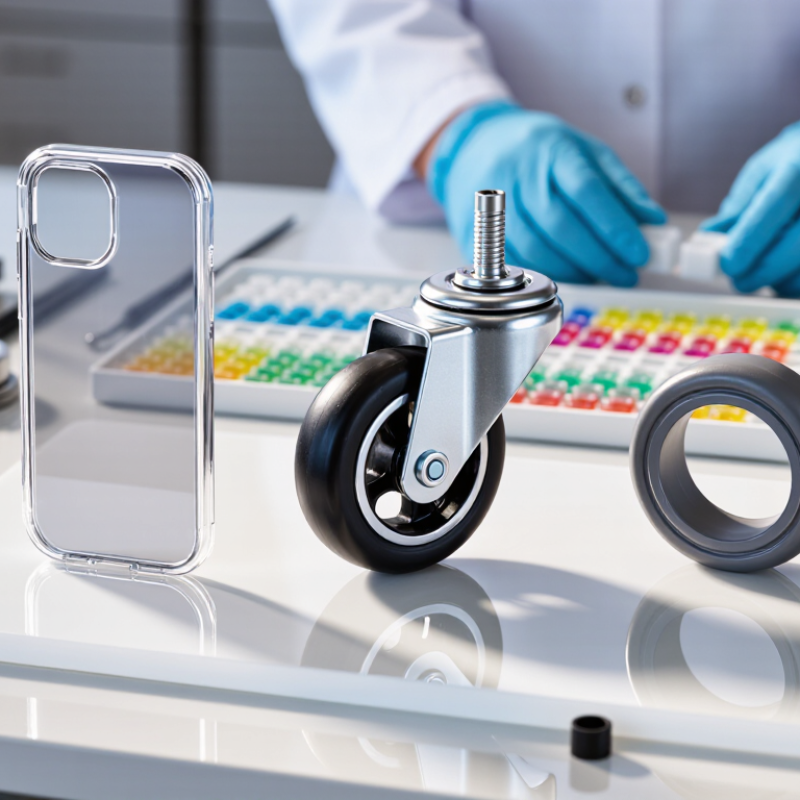
Choosing the right Hard Tpu is less about finding the hardest grade and more about matching the material to the product’s real demands. A phone case, caster wheel, and industrial seal may all need durability, yet each faces different impacts, temperatures, and surface wear. Hardness is only one clue. The right choice also depends on rebound, tear resistance, chemical exposure, processing method, and the feel customers expect.
A useful materials-selection principle is: “Choose hardness for the job, then verify performance under the conditions the product will actually face.” No verifiable expert quotation or name was provided, so I have not invented one. In practice, compare technical data sheets from the same test method, then test molded samples in the intended design. A 95 Shore A grade may feel firm in a small component but behave differently in a thick part. A quick bench test can reveal a problem; it cannot replace testing across temperature and repeated use.
This guide outlines how to define product requirements, compare Hard Tpu grades, and assess processing and cost trade-offs. It also highlights common selection mistakes, such as treating hardness as a complete measure of toughness. The process is not always tidy. Supplier data can vary, and early assumptions may need revisiting. Better to discover that before tooling is finalized.
How to Choose the Right Hard TPU for Your Products?
Understanding Hard TPU and Its Key Properties
Hard TPU is a thermoplastic polyurethane formulated for greater stiffness than softer TPU grades. “Hard” does not describe one fixed material. Hardness is commonly measured on the Shore D scale, but grades with similar readings can still behave differently under impact or repeated bending. Check the supplier’s technical data sheet for the exact grade, not just a hardness number.
Hard TPU can offer useful abrasion resistance, toughness, and flexibility compared with many rigid plastics. The balance depends on its formulation and processing. For example, a phone-case edge may need to resist scuffing while still flexing during installation. A thin, stiff part may crack where it meets a screw hole. Test samples under real loads, temperatures, and contact with oils or cleaners; chemical resistance varies by grade. It is easy to focus on hardness and miss the part’s weak points.
Defining Your Product’s Performance Requirements
A hard TPU should be chosen around the work your product must perform, not just a hardness number. Start by listing the loads it will face: repeated bending, sudden impact, compression, or rubbing against rough surfaces. A protective housing may need abrasion resistance, while a wheel or grip may need controlled flex. These demands can compete.
Shore hardness is useful, but it does not predict the whole part’s behavior. Wall thickness, ribs, corners, and molding conditions all affect stiffness and durability. Numbers can mislead. Define acceptable limits for deformation, tear, and wear, then test molded samples with the product’s actual geometry. A flat material coupon may not reveal stress around a thin snap-fit or sharp corner.
Consider the operating environment, too. Record expected temperatures, moisture, oils, and cleaning agents, then check whether they change flexibility or surface quality. If the part sits outdoors or near heat, test it after exposure, not only when new. Test the actual part. Early trials may show that a harder grade feels reassuring but transfers too much impact to nearby components. That trade-off is easy to miss on a specification sheet. Review failures, adjust the requirement, and retest before fixing the material choice.
How to Choose the Right Hard TPU for Your Products?
Defining Your Product’s Performance Requirements
Typical tensile-strength ranges can help narrow down hard TPU options, but they are indicative rather than guaranteed. Compare product-specific datasheets and test conditions, then select a grade that also meets your requirements for hardness, flexibility, abrasion resistance, and operating environment.
Comparing TPU Hardness, Grades, and Formulations
How to Choose the Right Hard TPU for Your Products?
Comparing TPU Hardness, Grades, and Formulations
Hard TPU is not simply “the hardest option.” Shore hardness describes indentation resistance, not tear strength, abrasion life, or flexibility. Measure samples using ISO 7619-1 or ASTM D2240, and compare results on the same Shore scale. A rigid clip and a protective equipment housing may both need firm support, yet respond differently to impact. Hardness is one clue, not the whole decision.
Many TPU grades span soft Shore A to hard Shore D ranges, but formulations vary by supplier and test conditions. Polyester-based grades can offer useful resistance to oils and abrasion; polyether-based grades are often selected where moisture resistance matters. Check the application closely. A cable jacket exposed to water needs different properties from a dry-running wheel. Grand View Research’s 2024 TPU market report estimated the global market at about US$2.7 billion in 2023, reflecting demand across varied applications—not one universal grade.
Ask for a technical data sheet, then test molded parts at their actual wall thickness. A datasheet value alone can mislead. Compare compression set, tear strength, chemical exposure, and processing window alongside hardness. Watch for brittleness at low temperatures. I would also question a “higher is better” assumption: a very hard clip may lose snap-fit resilience. Test the part, not just the pellet.
Assessing Processing Needs and Operating Conditions
When selecting hard TPU, match the grade to both the molding process and the product’s real operating environment. Grand View Research estimated the global TPU market at about US$2.8 billion in 2023, reflecting use across varied applications; that figure is market context, not a substitute for grade-level testing. Check the datasheet for hardness, melt-flow behavior, and recommended drying conditions. A hard grade may resist abrasion, yet still soften under sustained heat or deform under load.
For injection molding, confirm the supplier’s processing window, then trial the actual part geometry. Many TPU grades need controlled drying; moisture can cause bubbles, streaks, or reduced strength. The exact temperature and duration vary, so measure pellet moisture rather than trusting a timer alone. Watch for short shots at thin ribs and flash around the parting line. Small defects matter. For service conditions, record continuous temperature, peak heat, oils or cleaners, UV exposure, and contact pressure. Compare candidate grades using recognized methods such as ISO 7619-1 for indentation hardness, then test molded samples after heat or fluid exposure. A datasheet can mislead. I would not choose from Shore hardness alone; that shortcut is tempting, but incomplete.
Testing and Selecting the Right Hard TPU Grade
Hard TPU should be selected by measured performance, not by a “hard” label alone. Start with Shore hardness, then test tensile strength, elongation at break, tear resistance, and abrasion loss. ASTM D2240 reports durometer readings on a 0–100 scale; those readings are not a direct measure of stiffness. Compare grades using the same specimen thickness, conditioning, and test method. Small changes matter.
Build a test matrix around the product’s real stress points. A phone case may need edge-impact resistance; a wheel needs abrasion and compression testing. ISO 37 covers tensile properties, while ISO 34-1 measures tear strength. Ask suppliers or an independent laboratory for full test reports, including units, specimen details, and test conditions. Compare numbers only when methods match. Then mold trial parts and inspect seams, corners, and thin sections for cracking or sink marks. A spreadsheet can still mislead. I would also retest after heat or moisture conditioning; this step is easy to skip, and I have seen it change a grade decision. The final choice should balance stiffness with the flexibility the part actually needs.