Why Do You Need a Water Pump for Your Home or Garden?

A water pump is an essential tool for homeowners and gardeners alike. It serves a variety of crucial functions. Whether for irrigation or drainage, a water pump can make life easier.

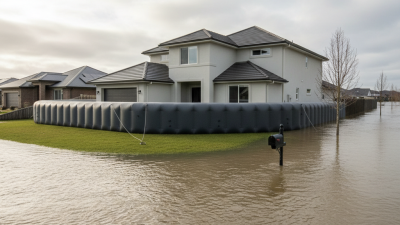
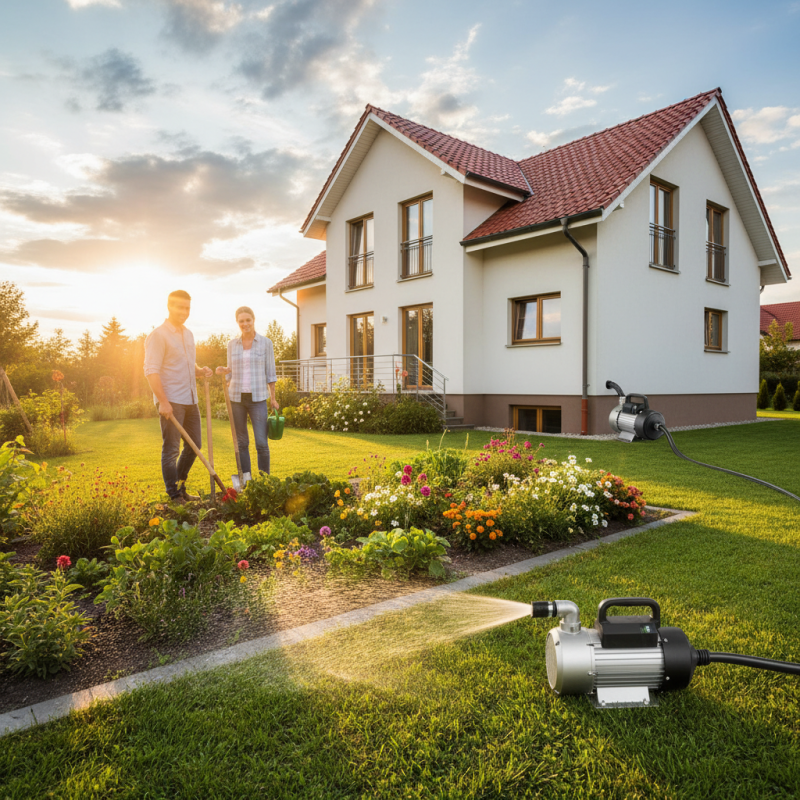
In gardens, plants thrive when properly watered. A water pump distributes water effectively when rain is scarce. It can also help in removing excess water after heavy rainfall. This keeps plants healthy and vibrant. For homes, water pumps can supply fresh water for daily needs. They can also ensure basements stay dry during storms.

Despite their advantages, some may overlook the importance of a water pump. Choosing the wrong type or size can lead to problems. People often underestimate their water needs. This oversight can impact a garden or home's efficiency. Investing time in understanding your water requirements is vital. A reliable water pump can enhance the quality of life in your home.
Why Do You Need a Water Pump for Your Home or Garden?

Factors to Consider When Choosing a Water Pump for Your Needs

Why Do You Need a Water Pump for Your Home or Garden?

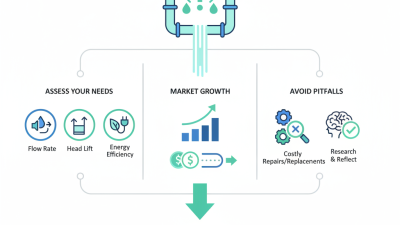
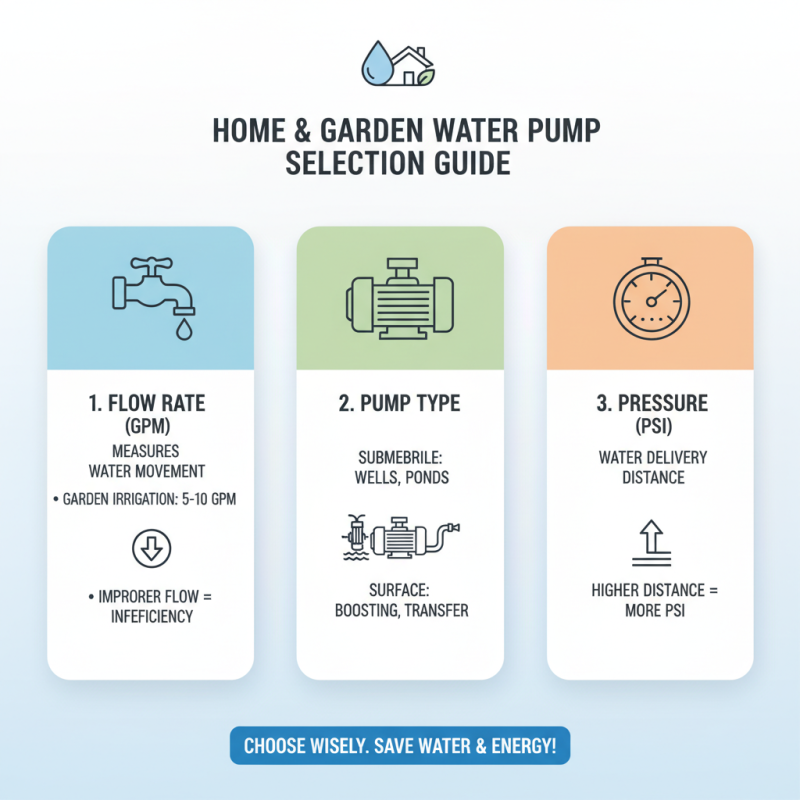
When selecting a water pump for your home or garden, various factors come into play. Flow rate is crucial. It measures how much water the pump can move. Ideally, choose a pump with a flow rate tailored to your specific needs. For example, a garden irrigation system often requires 5-10 gallons per minute. Studies indicate that improper flow rates can lead to inefficiencies and wasted resources.

Another important consideration is the pump type. Submersible pumps are often more efficient for deep wells, while surface pumps work well for shallow sources. Depending on the source depth, your choice can impact longevity and performance. The Water Systems Council notes that mismatched pump types can cause increased wear over time and potential failures.

Don't overlook the energy consumption. Some pumps are more energy-efficient than others. According to the U.S. Department of Energy, the most efficient pumps can save up to 30% on energy costs. Performance and cost should be balanced. Investing in a higher-quality pump might seem costly now, but it may save you money in the long run. Always consider the specific demands of your home or garden. This reflection can be vital for a fruitful choice.
Different Types of Water Pumps and Their Applications in Home and Garden

Why Do You Need a Water Pump for Your Home or Garden?

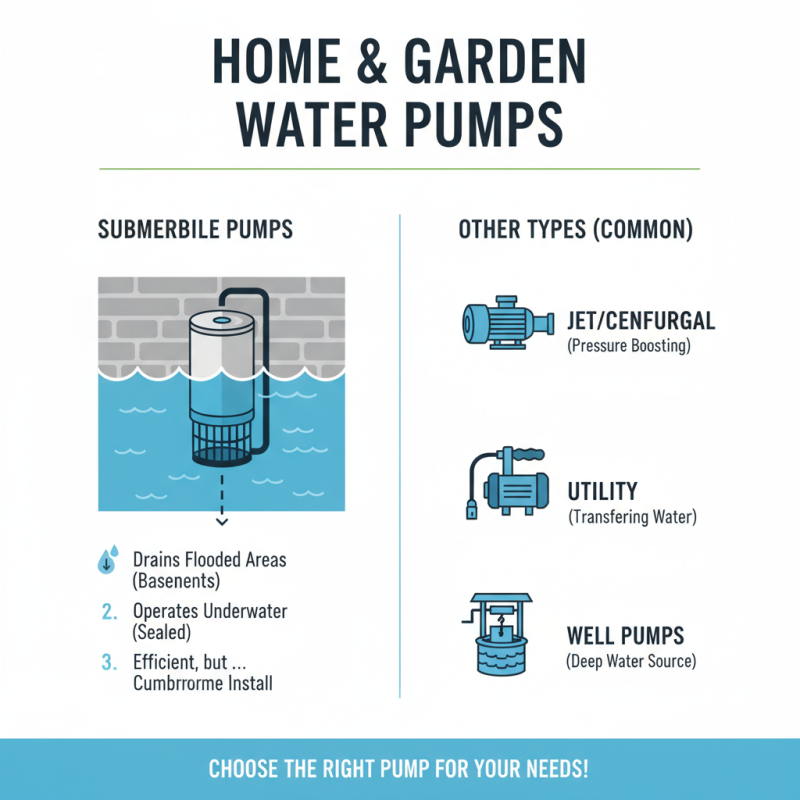
When considering water pumps for your home or garden, it's essential to understand the different types available. Submersible pumps are popular for draining water from flooded areas, such as basements. They are sealed, allowing them to operate underwater. They're efficient but can be cumbersome to install.

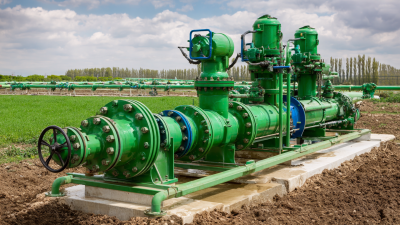
Surface pumps, on the other hand, work above ground. They are ideal for drawing water from wells or ponds. However, their effectiveness may be limited by suction depth. It's crucial to assess your garden's water needs. Choosing the wrong type can lead to frustration and wasted energy. Solar-powered pumps offer an eco-friendly option. They harness sunlight, but their reliance on weather means they might not always perform reliably.

Irrigation systems also benefit from pumps. A proper setup can make your garden thrive. Yet, improperly installed systems may waste water and create uneven coverage. Understanding your specific needs will help you choose the right pump type. Occasionally, it's a trial-and-error process, requiring adjustments and learning from mistakes. Each experience enhances your knowledge, making your home or garden flourish.

Benefits of Using a Water Pump for Efficient Water Management

Water pumps play a crucial role in managing water efficiently in homes and gardens. They help in transferring water from one place to another with ease. For instance, if you have a large garden, using a water pump can make irrigation quicker and less labor-intensive. Instead of dragging a hose, a pump delivers water directly to your plants, saving time and effort.

Moreover, water pumps help in reducing water wastage. With precise control over water flow, you can efficiently water your garden without over-saturating the soil. This means healthier plants and lower water bills. However, it is important to choose the right pump for your specific needs. An oversized pump may cause excessive runoff, while a smaller pump might not deliver enough water. Finding the balance can be tricky.

In addition, maintaining a water pump requires attention. Regular checks are necessary to ensure it functions properly. Sometimes, minor issues can lead to significant setbacks, such as leaks or blockages. These problems may arise from neglecting routine maintenance tasks. A little diligence can prevent frustration later on, making life easier for any homeowner or gardener.

Common Maintenance Practices for Water Pumps to Ensure Longevity

Maintaining a water pump is crucial for its longevity. Regular checks on filters and impellers can prevent clogs. Studies show that nearly 40% of pump failures result from lack of maintenance. A simple monthly inspection can save you costs in the long run. Clean the inlet screen regularly. A dirty screen can lead to reduced efficiency.

Changing the oil is another key practice. Many experts recommend changing it annually. Dirty oil can cause excessive wear. Pay attention to vibrations. Unusual vibrations often indicate underlying problems. If noticed early, many issues can be resolved.

Ensure that your pump is installed properly. Misalignment is a common issue and can lead to short pump life. Regularly inspecting seals and fittings is essential. Leaks can lead to significant water loss and increased bills. Ultimately, a proactive approach to pump maintenance can enhance performance and extend lifespan.

Water Pump Maintenance Practices

The chart above illustrates the common maintenance practices for water pumps and their recommended frequency in a year. Regular inspection and checking fluid levels are crucial for ensuring the longevity of your water pump.

Cost Considerations and Energy Efficiency of Water Pumps in Households

Water pumps play a vital role in household and garden management. When considering a water pump, cost is a key factor. Initial purchase prices vary widely, depending on the type and capacity. Simple models might cost less, but complex systems can strain your budget. Don't overlook installation expenses, as these can add up quickly.

Energy efficiency is another crucial point. An efficient pump can save you money on utility bills. Look for models designed to use minimal electricity while providing high performance. Investing in energy-efficient options might cost more upfront but yields long-term savings. Sometimes, older pumps waste energy, leading to higher costs. It may be time to reevaluate existing systems to ensure they remain effective and economical.

Consider maintenance too. Regular servicing can prevent costly repairs down the road. However, this can be forgotten in busy households. It’s easy to overlook small leaks or noises. A proactive approach can keep your system running smoothly. Ultimately, the right pump enhances water flow and can conserve energy, benefiting both your wallet and the environment.

Why Do You Need a Water Pump for Your Home or Garden? - Cost Considerations and Energy Efficiency of Water Pumps in Households

Pump Type Initial Cost (USD) Annual Energy Cost (USD) Efficiency (%) Common Use
Submersible Pump 150 - 300 50 - 100 70 - 85 Well Water, Irrigation
Jet Pump 100 - 250 60 - 120 60 - 75 Shallow Wells, Garden
Centrifugal Pump 300 - 600 70 - 150 75 - 90 Irrigation, Drainage
Diaphragm Pump 200 - 400 40 - 80 65 - 80 Chemical Transfer, Irrigation
Pool Pump 250 - 500 60 - 110 55 - 75 Swimming Pools