
Choosing the right Angle Grinder Parts can improve cutting accuracy, safety, and tool life. However, compatibility is not always obvious from a product photo. A disc may fit the spindle but still work poorly under heavy pressure. A guard may look strong but fail to protect the operator when its size is wrong. In a busy workshop, these small differences become very noticeable. Excessive vibration. Uneven sparks. Premature wear.
This guide presents 10 practical tips for selecting reliable Angle Grinder Parts. It draws on common workshop experience, manufacturer guidance, and careful inspection practices. You will learn how to check thread sizes, disc diameters, guard positions, power ratings, and material quality. We will also consider cooling performance, replacement availability, and comfortable handling. These details matter when an angle grinder runs against steel, masonry, or tile for several minutes.
One mistake I once made was trusting a low-cost accessory without checking its rated speed. It fitted perfectly, but that was not enough. The part overheated sooner than expected. That experience changed how I evaluate replacements. Price still matters, yet safety information matters more. Always compare specifications with the grinder’s manual and inspect parts before use. No checklist is perfect. Conditions vary between tools, materials, and operators. Careful judgment remains essential, especially when a part shows cracks, looseness, or unusual noise.
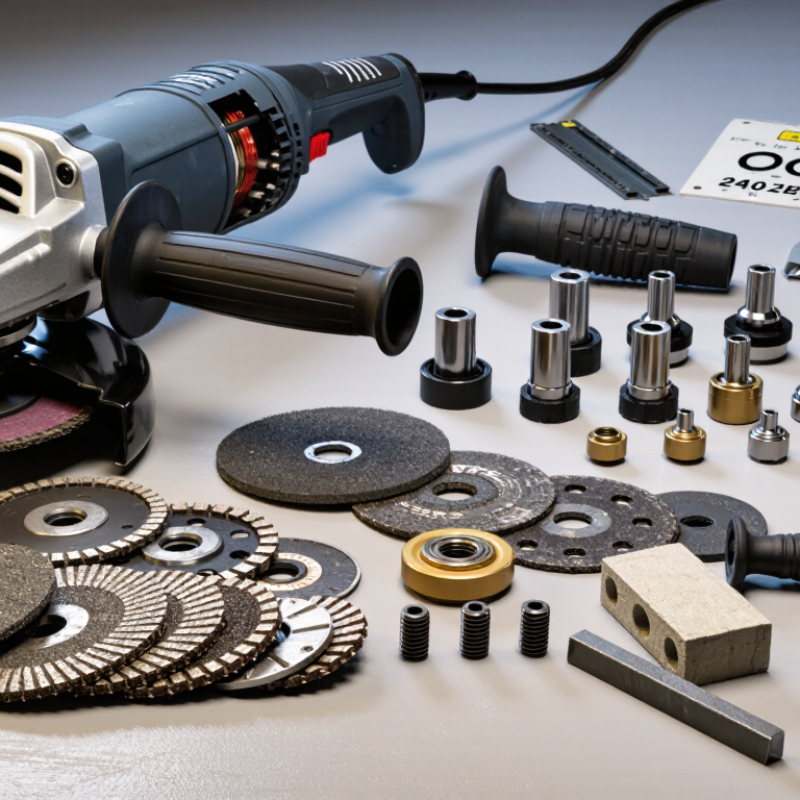
Choosing angle grinder parts starts with identification, not guesswork. Read the model code on the nameplate, usually near the handle or rear housing. Record voltage, rated power, disc diameter, and rotation speed. These details narrow the correct parts. A similar-looking grinder may use a different spindle thread or gear size. Measure twice.
Match each required part to the model’s technical specifications. For a disc flange, check the bore diameter and seating surface. For a guard, confirm its diameter range and mounting method. Brushes need the correct length, width, spring style, and terminal shape. Bearings require exact inner and outer diameters, plus width. A parts diagram or service manual is more reliable than an online photograph. I have seen small differences cause vibration, heat, or poor alignment. Do not rely on color alone.
Inspect the old component before ordering. Photograph wire positions, count gear teeth, and note worn surfaces. Check whether damage began elsewhere, such as a loose bearing damaging the gear. Safety-related parts deserve extra care. A cracked guard, damaged switch, or missing insulation should not be treated as a minor replacement. If measurements conflict, pause and verify them with technical documentation or a qualified repair professional. My first measurement is not always perfect. Rechecking prevents an expensive mismatch. Keep the original part until the replacement fits correctly.
Use the grinder’s model plate and service manual to confirm every replacement part. The chart shows representative no-load speed limits commonly associated with standard disc diameters; always match the exact rating printed on the tool, guard, and accessory.
Key checks: tool model, disc diameter, bore diameter, spindle thread, rated power, no-load speed, guard size, switch type, carbon-brush dimensions, and gear or bearing specifications. Never install a disc whose maximum rated speed is below the grinder’s no-load speed.
An angle grinder’s replacement parts must match both power and operating speed. A wheel rated below the grinder’s no-load speed can fracture dangerously.
Power matching is equally important. A high-wattage grinder can overload a light-duty spindle, switch, or gear set. For example, a grinder drawing 1,200 watts needs parts designed for sustained heat and torque, not occasional trimming.
Compare the grinder’s rated input, disc diameter, spindle thread, and duty cycle.
Use the exact speed rating printed on the part. Never assume a smaller disc is automatically safer. Smaller accessories may spin faster and generate intense heat at the rim.
Inspect the guard, flange, and retaining nut for wear or distortion. I have seen a loose flange leave bright scoring around the spindle. That small mark deserved more attention than it received.
Replace questionable parts. Test the grinder briefly without contacting material, then listen for vibration, scraping, or uneven acceleration. Stop immediately if anything feels wrong.
Choosing angle grinder parts starts with the material, not the price. Abrasive discs should have consistent grain distribution and reinforced construction. Poorly bonded discs may crack under heat or pressure. Steel guards, flanges, and spindles should resist bending, corrosion, and repeated vibration. Check the part’s dimensions carefully. A close fit matters.
Durability also depends on working conditions. For frequent cutting, choose components rated for continuous heat and heavy loads. For light polishing, excessive strength may be unnecessary. Inspect brushes for firm contact surfaces and stable springs. Examine switches for smooth movement and secure insulation.
Safety markings deserve equal attention. Confirm the maximum speed rating before using any disc or wheel. Never use a part below the grinder’s operating speed. Look for clear manufacture dates, material information, and traceable safety documentation. Check applicable standards in your region, because requirements can differ.
Guards should cover the correct area and remain firmly attached. Test every replacement part with the tool unplugged first. Then run it briefly in a clear space.
Small details matter. Even experienced users can overlook hidden cracks, unusual noise, or slight wobbling. When information is missing, pause and verify it through reliable technical documentation rather than guessing.
10 Tips for Choosing Angle Grinder Parts
Compatibility starts with the disc, not the grinder body. Match the disc diameter, arbor size, thickness, and maximum RPM to the tool’s rating. A cutting wheel is not a grinding wheel. Never assume similar-looking parts perform alike. Check the inner flange and outer nut for correct seating. Even a small mismatch can create wobble, heat, or sudden disc failure.
The guard must cover the correct disc type and diameter. It should lock firmly without touching the wheel. Select a side handle with the same mounting thread and position options as the grinder. A loose handle reduces control, especially during overhead work. The U.S. Bureau of Labor Statistics recorded 5,283 fatal occupational injuries in 2023. That total is not grinder-specific, but it reinforces the value of disciplined checks. OSHA guidance also requires suitable guarding for many abrasive-wheel operations.
Inspect washers, spindle locks, brushes, switches, and power cords before buying replacement parts. Use the equipment manual and manufacturer’s dimensional drawings, not only an online product photo. In practical workshops, this step is often skipped. I would not trust a “universal” label without measurements. Record the spindle thread, guard diameter, and disc speed in a simple checklist. Then test the assembled grinder at no load, standing away from the disc plane. Recheck it after the first few minutes. Small oversights remain possible. Respect that.
| No. | Part or Compatibility Area | What to Check | Reliable Selection Criteria | Why It Matters |
|---|---|---|---|---|
| 1 | Disc diameter | Match the disc diameter to the grinder's specified maximum wheel size. | Use only the diameter stated on the tool rating plate or in the operating manual; never fit an oversized disc. | An oversized disc can exceed the guard capacity and the tool's design limits, increasing the risk of disc failure. |
| 2 | Arbor and mounting dimensions | Confirm the disc bore, spindle thread, flange, and retaining nut dimensions. | The disc bore must seat correctly on the spindle or supplied flange, and the retaining hardware must engage fully without forced fitting. | Incorrect mounting can cause runout, vibration, slipping, or loss of the wheel during operation. |
| 3 | Disc type and application | Choose a wheel designed for cutting, grinding, sanding, polishing, or wire brushing. | Check the wheel's marked application and material suitability, such as masonry, metal, stainless steel, or surface finishing. | Cutting wheels are thin and intended for cutting; they should not be used for side grinding. Using the wrong wheel can cause breakage or kickback. |
| 4 | Maximum speed rating | Compare the disc's maximum revolutions per minute with the grinder's no-load speed. | The disc's marked maximum speed must be equal to or higher than the grinder's rated no-load speed. | Operating a wheel above its rated speed can result in wheel disintegration and serious injury. |
| 5 | Guard size and function | Make sure the guard matches the wheel type and diameter and locks securely in position. | Use the guard specified for the selected accessory; it should not be cracked, loose, obstructive, or modified. | A correctly fitted guard helps contain fragments and directs sparks and debris away from the operator. |
| 6 | Side handle and mounting thread | Check the handle thread, mounting location, grip condition, and adjustment options. | The handle should screw in completely, remain tight during use, and support both left- and right-handed positioning when provided. | A secure auxiliary handle improves control and helps reduce the likelihood of losing the tool during kickback. |
| 7 | Flanges and retaining nut | Inspect the flange faces, nut type, seating surfaces, and compatibility with the chosen disc. | Use clean, undamaged, correctly oriented flanges and the retaining nut intended for that accessory. | Proper clamping distributes pressure evenly and helps prevent disc movement, distortion, or cracking. |
| 8 | Power and electrical compatibility | Verify voltage, frequency, plug configuration, and power requirements before fitting or replacing electrical parts. | Replacement switches, cords, and electrical components must match the tool's rated electrical specifications and connection design. | Incorrect electrical parts may cause overheating, poor operation, electric shock, or fire. |
| 9 | Bearing, brush, and switch replacement | Compare dimensions, connector layout, shaft fit, brush size, and component ratings with the original part. | Use the exact service specification or a documented equivalent; do not rely only on visual similarity. | Small dimensional or rating differences can cause excess noise, arcing, vibration, overheating, or premature failure. |
| 10 | Condition, certification, and inspection | Inspect discs and guards for cracks, chips, warping, corrosion, or missing markings before use. | Select undamaged accessories with legible safety markings and follow the applicable tool and wheel instructions. | Compatibility alone does not make a damaged or improperly marked component safe to operate. |
Choosing angle grinder parts requires more than comparing shelf prices. Check the spindle thread, disc diameter, guard fit, bearing size, and rated speed. A cheaper switch or carbon-brush set can fail quickly if its electrical rating is wrong. I once chose a low-cost brush set without checking its length. It fitted, but the grinder sparked under load. That mistake changed how I compare parts.
Tip: Compare total cost, not the listed price. Include delivery, required tools, and downtime. Ask whether the seller stocks common brushes, switches, guards, and bearings. The European Commission’s 2020 Consumer Conditions Survey reported that 77% of consumers preferred repairing products over replacing them. That preference only works when replacement parts remain available. A two-year warranty is useful, but read its exclusions. Some warranties cover manufacturing defects, not abrasive dust, overload damage, or normal wear.
Tip: Compare warranty terms line by line. Confirm claim procedures, proof-of-purchase rules, repair times, and local service access. The Circularity Gap Report 2024 estimated that only 7.2% of the global economy was circular. Durable, repairable tools can reduce waste, but availability matters more than marketing language. Ask for a parts diagram and a written compatibility list. Independent technical reviews, safety certifications, and measured speed ratings deserve more weight than star ratings alone. I still find some “universal” parts confusing. A five-minute measurement can prevent an expensive, unsafe return.
Please enter the details to download, thank you
Get in Touch With Us
Please enter the details to download, thank you