Top Water Diversion Barriers for Effective Water Management Solutions?

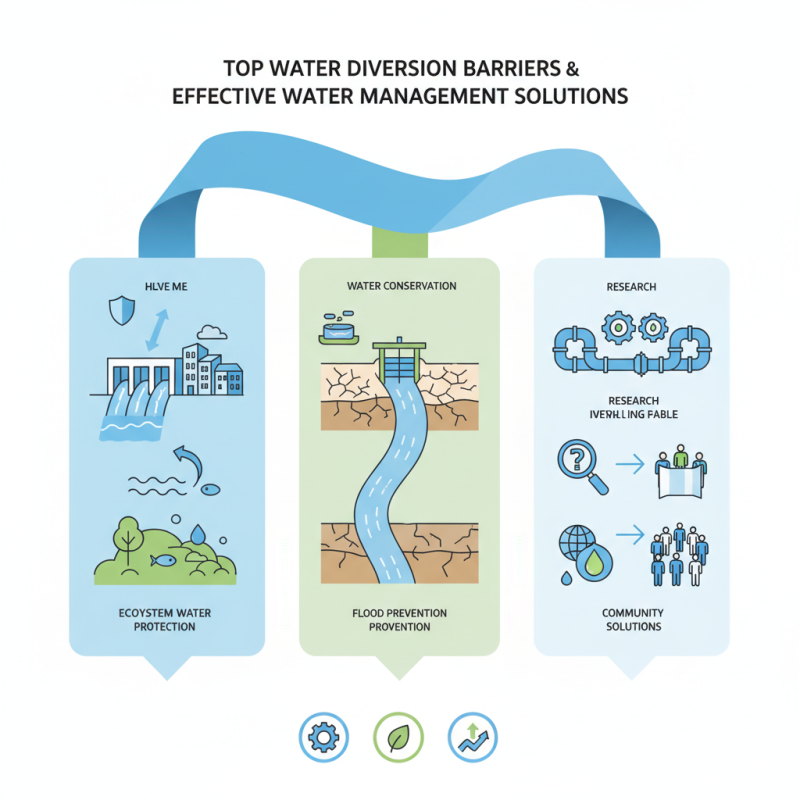
Water is a precious resource that must be managed wisely. Water diversion barriers are crucial tools for effective water management. These structures help redirect water flow. They can prevent flooding, conserve water, and protect ecosystems. The effectiveness of these barriers varies based on their design and location.

Many regions face unique challenges regarding water management. Some barriers fail to achieve their intended goals. For instance, poorly designed barriers can disrupt local habitats. They may lead to unforeseen consequences for wildlife. It is essential to evaluate these structures regularly. Communities must learn from past mistakes and adapt accordingly.

In recent years, innovations in water diversion barriers have emerged. These advancements promise better efficiency and sustainability. However, not all solutions are universally applicable. Local conditions and needs can differ greatly. Continuous research and community involvement are necessary for success.
Top Water Diversion Barriers for Effective Water Management Solutions?

Types of Water Diversion Barriers and Their Functions

Water diversion barriers are essential for sustainable water management. These structures help redirect water flow for agriculture and urban planning. They play a crucial role in flood control, irrigation, and wastewater management. The International Water Management Institute estimates that better water diversion methods can save up to 30% of water used in agriculture.

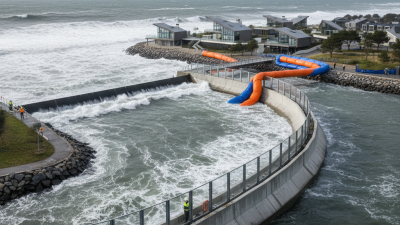
There are several types of water diversion barriers, each with specific functions. Earthen dams, for instance, can hold back substantial water volumes. They are often used in rural areas for irrigation. Concrete barriers are more common in urban settings. They protect communities from flooding by guiding stormwater into controlled areas. However, maintenance of these barriers can be challenging. Neglected barriers may erode or fail, leading to environmental damage.

Moreover, the effectiveness of barriers can vary widely. Reports suggest that improper design can lead to significant water loss. For example, seepage through barriers can reduce the intended water supply. Additionally, poor placement of these structures may disrupt local ecosystems. Proper planning and ongoing evaluation are essential for maximizing the benefits of water diversion barriers.


Benefits of Implementing Water Diversion Barriers in Management

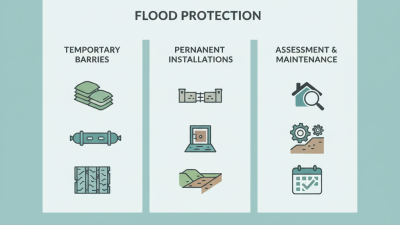
Water diversion barriers play a crucial role in effective water management. They help to redirect excess water, reducing flood risks in vulnerable areas. These barriers can be temporary or permanent, providing flexibility based on environmental needs.


Implementing water diversion barriers offers numerous benefits. They promote better water quality by filtering pollutants, which can improve local ecosystems. These barriers can also aid in the preservation of groundwater resources, ensuring a sustainable water supply for communities.


Despite their advantages, challenges exist. The construction of barriers may disrupt local wildlife. Some communities may resist changes in their landscape, fearing negative impacts. Future projects should consider these concerns. Balancing human needs with environmental preservation is essential for successful implementation.

Key Materials Used in the Construction of Water Diversion Barriers

Water diversion barriers play a crucial role in managing water resources effectively. The choice of materials for constructing these barriers significantly impacts their performance. Commonly used materials include concrete, steel, and earth. Each material has its advantages and drawbacks. Concrete offers strength and durability but can be expensive and time-consuming to install.

Steel is another popular option. It provides great flexibility and can adapt to various environmental conditions. However, it is prone to corrosion, requiring regular maintenance. Earth-based barriers, though less durable, are more sustainable and can blend with natural landscapes. They are often used when a lightweight option is preferred, yet their effectiveness is influenced by water saturation levels.

In practice, the decision-making process can be challenging. Designers must weigh factors like cost, environment, and intended use. Sometimes, the chosen material may not perform as expected. Observations of existing barriers reduce uncertainty. Learning from these experiences can lead to better designs in the future. Balancing effectiveness and sustainability remains an ongoing challenge. Each project serves as a reminder of the complexities involved in creating efficient water management solutions.

Top Water Diversion Barriers - Key Materials Used

This chart illustrates the usage of key materials in the construction of water diversion barriers. Understanding the material composition helps in assessing the effectiveness and sustainability of water management solutions.

Case Studies: Successful Water Management Using Diversion Barriers

Water diversion barriers have shown remarkable effectiveness in water management. In several case studies, communities faced challenges due to flooding and water scarcity. For instance, a report by the National Academy of Sciences states that improperly managed waters can lead to a 25% increase in flood risks.

One success story is in California, where innovative barriers redirected stormwater into reservoirs. This approach not only helped prevent flooding but also increased water availability during dry seasons. According to a study by the Water Research Foundation, regions employing diversion strategies experienced up to a 30% improvement in water conservation.

Tips: Regularly assess your region's water needs. Evaluate natural water paths and understand local rainfall patterns. Adaptation is crucial. Each system may require a unique approach based on specific environmental factors.

Another case to consider is a community in Texas. They used diversion barriers for irrigation, boosting agricultural productivity by 15%. The local farming community learned the importance of proper barrier placement and maintenance. Misalignment can lead to water wastage, posing a serious risk to resources.

Tips: Invest in community training sessions about water management. Knowledge sharing can prevent common pitfalls. Small efforts can lead to enhanced sustainability practices.

Challenges and Considerations in Designing Water Diversion Barriers

Top Water Diversion Barriers for Effective Water Management Solutions?

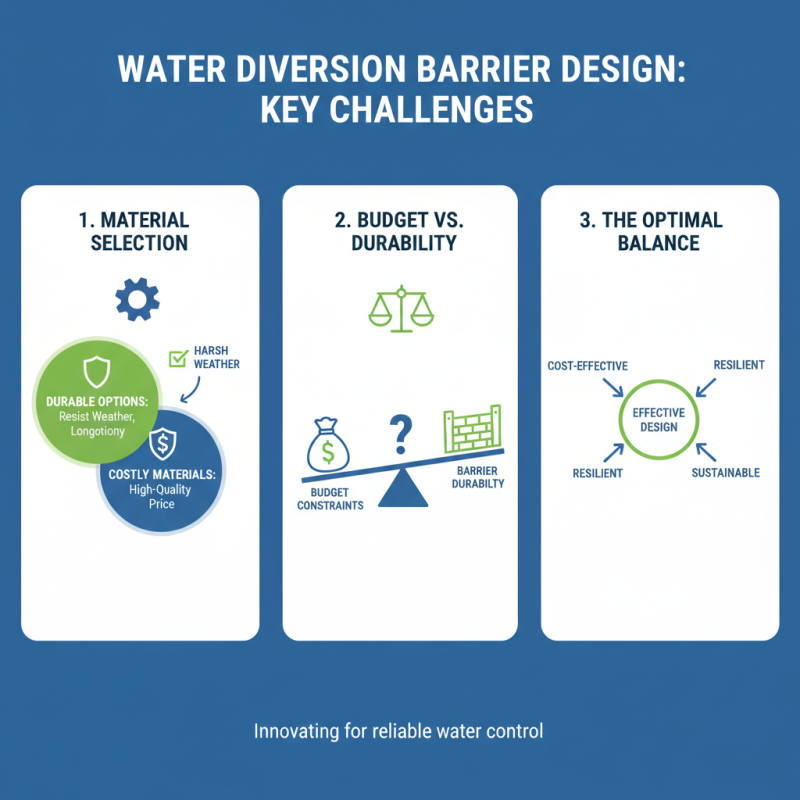
Designing effective water diversion barriers presents numerous challenges. The selection of materials is crucial. Durable options can withstand harsh weather. However, high-quality materials often come at a steep cost. Balancing budget constraints with durability is a recurring issue.

Environmental impact is another significant consideration. Barriers can disrupt local ecosystems. Fish migration and water flow patterns may suffer. Addressing these effects requires thoughtful planning. Engaging with biologists and environmentalists can lead to better solutions.

**Tip:** Assess the potential ecological impact before deciding on a barrier design.

Maintenance also cannot be overlooked. Regular inspections and repairs are necessary to ensure functionality. In some cases, barriers can fail quickly if not adequately cared for. This can lead to flooding or water mismanagement.

**Tip:** Set up a routine maintenance schedule to prevent issues.

The integration of technology in monitoring can aid in timely interventions. However, incorporating innovative solutions may introduce complexity. Balancing technology with practicality is essential in effective design.