
Why Use a Safety Lockout Box?

A Safety Lockout Box helps organize the locks, tags, and keys used during hazardous energy control. It gives authorized workers one visible location for critical isolation devices. In a busy maintenance area, that visibility matters. A technician can check the box before opening a machine guard or starting repairs. Missing equipment becomes easier to notice. Confusion becomes less likely.

The value is practical, not decorative. During a scheduled conveyor repair, workers may need several personal locks, warning tags, and verification tools. A durable box keeps these items together near the work area. It also supports consistent procedures across shifts. Supervisors can inspect the contents, review sign-out records, and identify gaps before maintenance begins. Labels should remain readable. Hinges should work smoothly. Small details matter.

Still, a Safety Lockout Box cannot make an unsafe process safe by itself. It does not replace training, energy identification, isolation, or zero-energy verification. A box can be properly mounted and still be poorly managed. That is an uncomfortable possibility. Effective programs depend on competent people, clear procedures, suitable devices, and regular review. Manufacturers’ instructions and recognized workplace safety guidance should shape the system. Teams should also learn from near misses, damaged locks, and forgotten tags. The best setup may change as equipment, staffing, and work conditions change. Used thoughtfully, the box becomes more than storage. It becomes a visible reminder that every repair begins with control, communication, and careful verification.
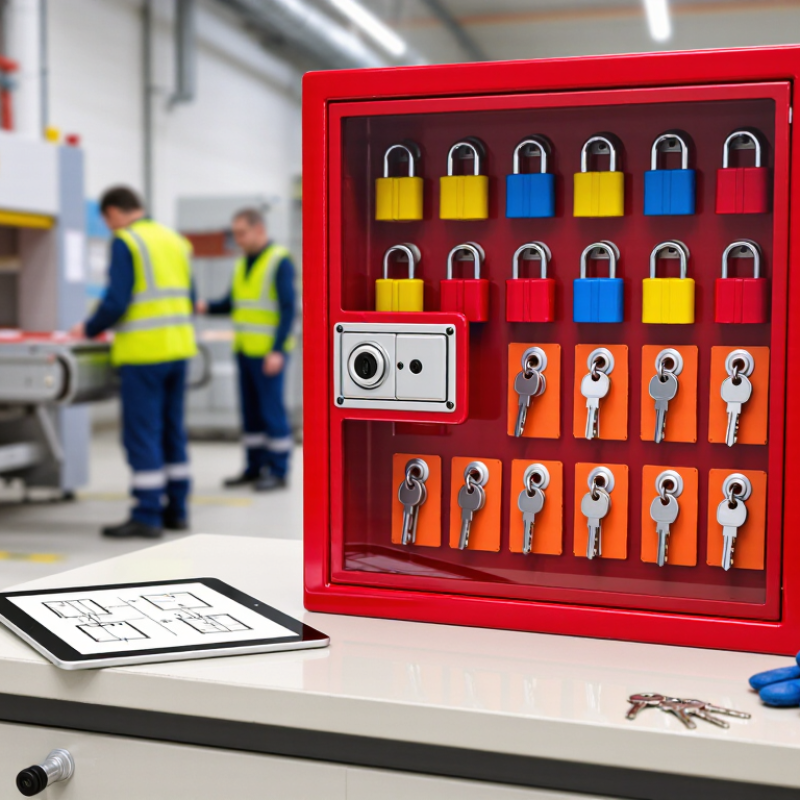
Why Use a Safety Lockout Box?

What Is a Safety Lockout Box?

Why Use a Safety Lockout Box?

What Is a Safety Lockout Box?

A safety lockout box is a controlled storage point for keys, locks, tags, and isolation records. It supports lockout/tagout procedures by keeping hazardous energy controls visible and organized. During maintenance, an authorized worker isolates electrical, hydraulic, pneumatic, thermal, or mechanical energy. The key then goes inside the box. Each exposed worker applies a personal lock to the box before work begins.

This arrangement helps prevent unexpected startup. OSHA estimates that effective hazardous-energy control prevents about 120 fatalities and 50,000 injuries each year. Its standard, 29 CFR 1910.147, also requires documented procedures, employee training, and periodic inspections. A box alone is not protection. It must connect with verified isolation points, clear responsibility, and a documented zero-energy check. A box can look perfect and still fail. That uncomfortable detail deserves regular review.

Tips: Choose a box with clear labels and enough space for every worker’s personal lock. Record the equipment name, isolation points, and authorized person. Test for zero energy before touching the machine. Remove locks only through a documented procedure. Review the process after every near miss. Small gaps matter. Sources: OSHA, Control of Hazardous Energy; OSHA, Lockout/Tagout Fact Sheet.

Why Use a Safety Lockout Box? - What Is a Safety Lockout Box?
Data Dimension Key Point Practical Information
Definition Centralized lockout storage A safety lockout box is a secure container used to organize and control lockout/tagout devices, personal safety locks, tags, and related procedures during hazardous-energy control activities.
Primary Purpose Prevent unexpected equipment startup It helps workers isolate hazardous energy before servicing, maintenance, cleaning, adjustment, or repair work begins.
Energy Sources Covered Multiple forms of hazardous energy Typical sources include electrical, mechanical, hydraulic, pneumatic, chemical, thermal, gravitational, and stored or residual energy.
Typical Contents Lockout and identification devices Common contents include padlocks, lockout tags, hasps, circuit-breaker lockouts, valve lockouts, cable devices, group lock boxes, and verification instructions.
Personal Protection One authorized worker, one identifiable lock Each authorized worker should apply a uniquely identifiable personal lock and should remove it only according to the established site procedure.
Group Lockout Supports multiple workers A group lockout box can hold keys from energy-isolating devices. Each participating worker applies a personal lock to the box so the equipment cannot be returned to service while any worker remains exposed.
Safety Sequence Control energy before work A typical sequence is: notify affected employees, shut down equipment, isolate energy sources, apply locks and tags, release or restrain stored energy, verify zero-energy conditions, perform the work, and restore service safely.
Verification Test before touching Isolation should be verified using appropriate methods, such as checking controls, attempting a start where safe, and testing for the presence of electrical energy with suitable equipment.
Organization Benefits Better visibility and readiness A dedicated box keeps devices in a known location, reduces misplaced equipment, supports inventory checks, and makes group lockout tasks easier to coordinate.
Identification Clear status information Labels, equipment identifiers, warning tags, and written procedures help communicate which machine is isolated, why it is isolated, and who is responsible for the work.
Construction Considerations Suitable for the work environment Selection should consider enclosure strength, corrosion resistance, visibility, available mounting space, number of users, lock capacity, and exposure to dust, moisture, chemicals, or temperature extremes.
Compliance Reference Use within a written energy-control program In the United States, lockout/tagout practices are addressed by OSHA’s Control of Hazardous Energy standard, 29 CFR 1910.147. Local regulations and site-specific procedures may impose additional requirements.
Training Requirement Workers need role-specific instruction Authorized employees, affected employees, and other employees should receive training appropriate to their responsibilities, including device use, energy identification, isolation procedures, and emergency practices.
Important Limitation A box does not replace isolation The box is an administrative and physical control aid. It does not replace machine-specific procedures, proper energy isolation, verification, training, or required personal protective equipment.

How a Lockout Box Controls Hazardous Energy

A safety lockout box turns a scattered isolation process into a controlled system. It does not remove hazardous energy by itself. Instead, trained workers place isolation keys inside the box. Each authorized worker then applies a personal lock to the box.

The process begins with identifying every energy source. These may include electrical circuits, hydraulic pressure, pneumatic air, stored heat, or suspended loads. Workers shut down the equipment and isolate each source. They release or restrain stored energy before testing the controls. A qualified person should verify zero energy with suitable testing equipment. Never rely on a dark display or a quiet motor.

The box supports group lockout work. One responsible person collects the isolation keys after each energy point is secured. Other workers cannot access those keys unless every personal lock is removed. This arrangement protects people during shift changes, inspections, and complex repairs. Clear tags should show the equipment, isolation points, and responsible personnel. A current procedure matters.

Small details matter.

In practical use, teams should inspect the box, locks, tags, and key count before work begins. A missing key or unclear name can delay the job and create pressure. That pressure invites mistakes. The system is strong, but it is not perfect. Poor training, incomplete energy surveys, or rushed verification can still defeat it. Supervisors should review unusual equipment and revise procedures when conditions change.

When a Safety Lockout Box Is Used

Why Use a Safety Lockout Box?

When a Safety Lockout Box Is Used

A safety lockout box is used when several workers control the same hazardous energy source. It supports group lockout/tagout during maintenance, cleaning, inspection, or repair. For example, a team may isolate electrical power, hydraulic pressure, and stored mechanical energy before opening a machine guard. The main isolation key goes inside the box. Each authorized worker then applies a personal lock to the box. The equipment should not restart until every personal lock has been removed. This simple arrangement reduces confusion when many people work across different shifts.

Tips: Confirm every energy source before starting. Read the machine procedure, identify isolation points, and release stored pressure or motion. Use clear tags with names and contact details. Test the equipment controls after isolation, but only according to the site procedure. Keep the box visible near the work area. Small labels matter.

In practice, the process is rarely tidy. A missing key, unclear tag, or late-arriving worker can create pressure to rush. Do not treat the box as a substitute for training or verification. A competent person should coordinate the isolation and check that each worker understands the boundary. One detail teams sometimes overlook is shift change communication. The incoming worker needs to apply a personal lock before the outgoing worker removes theirs. Good systems still need careful people. Mistakes can happen, so review the procedure after every job and improve weak points.

Key Steps for Using a Lockout Box

Why Use a Safety Lockout Box?

A safety lockout box supports controlled group lockout during equipment maintenance. It keeps isolation keys inside one secured location. Each authorized worker adds a personal lock before entering the work area. This prevents equipment startup while someone remains exposed to hazardous energy.

Key steps begin with a clear energy assessment. Identify electrical, hydraulic, pneumatic, thermal, and mechanical sources. Shut down the equipment using the approved procedure. Isolate every energy source, then release stored pressure, heat, motion, or electrical charge. Place the isolation keys inside the lockout box. Never assume a stopped machine is safe.

Each worker should inspect the box, confirm the correct equipment, and attach a personal lock. Test the controls and verify zero energy before work starts. A qualified person should lead this verification and record important details. Keep the box visible near the work area, but protect it from damage or unauthorized access. If conditions change, stop work and repeat the assessment. A rushed check is still a missed check.

Before restarting, every worker must remove their own lock. Inspect the equipment, replace guards, and confirm that people are clear. Notify affected workers before restoring energy. One practical weakness remains: teams may treat the box as a shortcut. It is not. The box organizes responsibility, but careful isolation and communication still determine safety.

Benefits and Selection Factors for Lockout Boxes

A safety lockout box supports controlled energy isolation during maintenance and repair work. It stores keys from locked disconnect points until every authorized worker removes their personal lock. This process reduces accidental re-energization and makes group work easier to monitor. A visible box near the work area also gives supervisors a quick status check. However, a lockout box cannot replace proper training or a verified isolation procedure.

The selection process deserves practical attention. Choose a box with enough lock positions for the largest expected crew. Check whether it resists impact, moisture, dust, and chemical exposure. Stainless steel may suit harsh environments, while durable plastic can reduce weight. Clear labels and a readable status panel help during busy shutdowns. The box should also hold isolation keys securely without crowding. A common mistake is choosing a compact model that becomes difficult to use with gloves. That detail can weaken an otherwise sound procedure.

Tips: Review the box during a real maintenance drill, not only from a product sheet. Confirm that every worker can attach and remove a personal lock comfortably. Inspect hinges, hasps, labels, and mounting points regularly. Keep a written inventory of keys and isolation devices. If the box is hard to identify at a distance, improve its location or labeling. Small visibility problems often become larger communication problems.

Why Use a Safety Lockout Box?

A lockout box supports group lockout/tagout by keeping keys and energy-isolating device controls secured until every authorized worker removes their personal lock. OSHA estimates that effective lockout/tagout practices prevent approximately 120 fatalities and 50,000 injuries each year in the United States.

When selecting a lockout box, consider the number of authorized employees, required lock capacity, group-lockout compatibility, visibility, durability, and suitability for the workplace environment. The chart uses a logarithmic scale so both estimates can be shown clearly.

Source: U.S. Occupational Safety and Health Administration (OSHA), Control of Hazardous Energy — Lockout/Tagout.