How to Choose Domestic Flood Barriers for Global Sourcing
Global sourcing flood protection requires more than comparing prices and shipping quotes. Practical experience shows that domestic flood barriers must match real buildings, local water behavior, and available labor. A barrier that works beside a brick doorway may fail against an uneven threshold or basement stairwell. That detail matters. Procurement decisions should begin with measured opening widths, expected water depth, setup time, and storage conditions. Product records should include material specifications, independent test evidence, installation instructions, warranty terms, and batch traceability. These documents help buyers compare suppliers fairly and explain performance claims to customers. They also reveal gaps.
International purchasing adds complexity. A supplier may provide attractive laboratory results, yet omit field limitations, replacement parts, or training support. Reliable sourcing therefore requires direct questions about testing methods, failure points, drainage pressure, packaging, and after-sales response. Local building practices and recognized safety requirements should be checked with qualified professionals before large orders are placed. Import classification, labeling, and delivery obligations also need careful review in each destination market. No product is perfect. A spreadsheet cannot show how quickly a tired worker can deploy a barrier during rising water. Small pilot orders, site trials, and documented feedback can expose weaknesses before they become expensive complaints. The right choice balances protection, usability, verified quality, supplier honesty, and long-term support—not simply the lowest quoted price. Some assumptions will be wrong. Good sourcing leaves room to learn, adjust specifications, and improve future purchases.
Define Domestic Flood Barriers and Their Main Applications
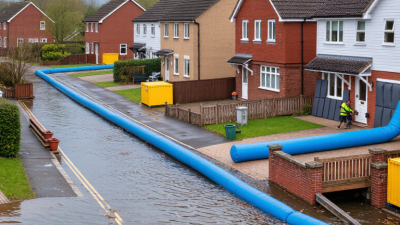
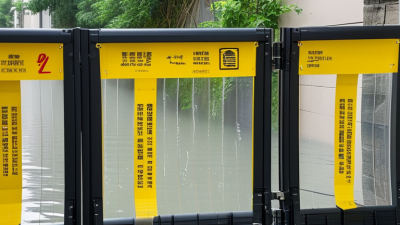
Domestic flood barriers are temporary or permanent systems placed across doors, garage entrances, vents, or low wall openings to limit water entry. They may use rigid panels, flexible tubes, inflatable chambers, or fitted thresholds. The right type depends on the opening and expected water exposure. Unlike pumps, barriers do not remove water; they create a physical boundary. Some require anchoring, while others rely on seals and water pressure. Fit matters.
Typical domestic uses include protecting ground-floor entry doors, basement stairwells, patio doors, and utility rooms with exterior access. A barrier can also shield a garage where the floor sits below the driveway. For a home near a stream, a removable panel may suit a doorway used daily. For a seldom-used basement opening, a fixed system might be more practical. These systems have limits: prolonged pressure, debris, or uneven floors can weaken a seal.
Tips:
Measure the clear opening at several points, not just across the top. Check the floor slope, nearby wall material, and storage space for removable parts. When sourcing internationally, confirm dimensions, installation instructions, and replacement seal availability. A neat product description can still hide a poor fit. Test the barrier before storm season.
Assess Flood Risks, Property Needs, and Barrier Performance
Choosing domestic flood barriers for global sourcing starts with the property, not the product catalogue. The World Bank estimates that floods affect around 1.8 billion people worldwide, including many people exposed to severe flood risk. Map the threat around each home: river overflow, coastal surge, surface water, or sewage backup. The WMO State of the Global Climate 2023 reported that sea-level rise reached 4.77 millimetres per year between 2014 and 2023, more than twice the 1993–2002 rate. A low doorway barrier may suit shallow surface water, but it cannot replace a designed system for deep, fast-moving flows.
Measure every opening. Include doors, garage entrances, air vents, and uneven thresholds. Record expected water depth, warning time, installation frequency, and storage conditions. Barrier performance depends on more than a laboratory rating. Check resistance to hydrostatic pressure, leakage, impact, corrosion, and repeated use. Independent test reports should identify test depth, duration, sealing method, and failure limits. Standards and certification requirements also vary by destination, so verify local building and safety rules before shipment.
Material selection needs practical thinking. Aluminium may reduce handling weight, while reinforced polymer can tolerate damp storage, but neither choice solves poor fitting. Ask for spare seals and clear replacement instructions. A trial installation in real rain is valuable. Still, one weakness remains: users may install barriers too late or leave gaps beside them. That human factor is easy to underestimate. Suppliers should provide training, inspection records, and measurable delivery checks, not only attractive performance claims.
Compare Barrier Types, Materials, Sizes, and Installation Methods
Domestic flood barriers differ in speed, reuse, and fit. Door shields suit single entrances; modular panels protect wider openings, while inflatable barriers can cover irregular thresholds. Sandless tubes are easy to deploy, but may need more storage space than expected. Think about the actual opening, not just the advertised width. Measure between jambs and check for uneven floors, outward-opening doors, and nearby steps.
Materials affect weight and sealing. Aluminum panels are rigid but need secure tracks; polymer units are lighter, though UV exposure and cold can affect durability. Inspect gasket compression and replacement access. U.S. Army Corps of Engineers hydraulic design guidance reflects a key sizing issue: freshwater pressure rises about 0.433 psi per foot of depth. At two feet, that is roughly 0.87 psi on each square inch of barrier. Small leaks matter. Compare product test documentation, including testing conducted under FM Approvals Standard 2510, and confirm whether results cover the intended water depth and installation method. Permanent tracks can improve repeatability; clamp-on systems avoid fixed hardware but depend more on surface condition and careful setup. That trade-off is easy to underestimate.
How to Choose Domestic Flood Barriers for Global Sourcing
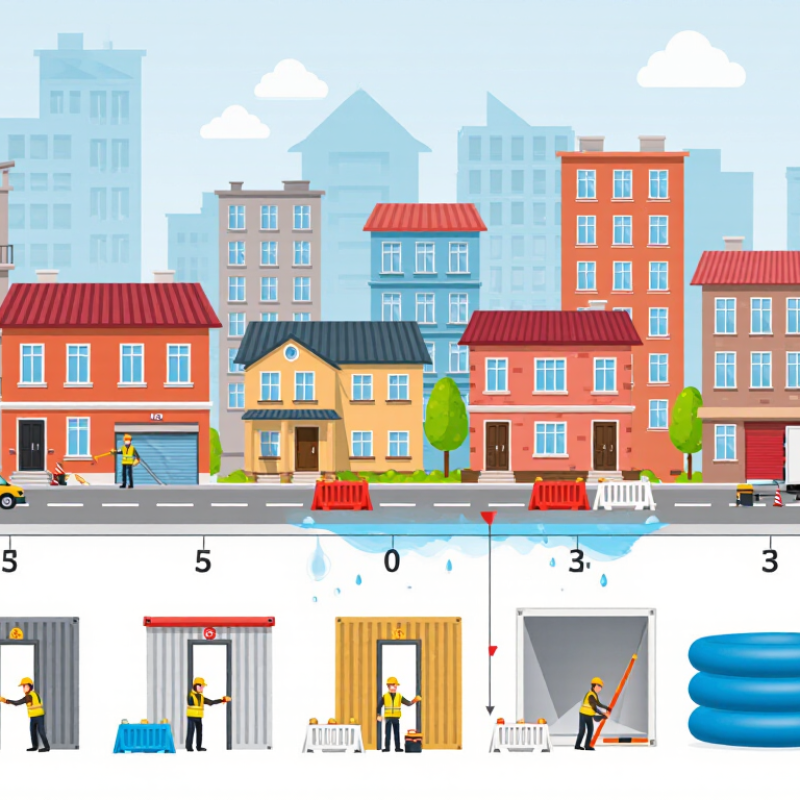
Indicative protection-height ranges for common domestic flood-barrier types
Ranges are representative, not standardized performance limits; actual heights vary by design and installation. When sourcing, match the tested protection height to the expected water level, check opening dimensions and ground conditions, and compare materials, storage needs, setup time, and whether the system requires anchoring or sealing.
Evaluate Global Suppliers, Certifications, Costs, and Shipping Terms
Choosing domestic flood barriers for global sourcing requires more than comparing product photos.
Start by screening suppliers with verified factory addresses, production records, and responsive technical teams. Ask for test reports showing water height, leakage performance, setup time, and repeated-use durability. A supplier should explain whether results apply to a complete system or only one component.
That difference matters.
Certification claims need careful review.
Request certificates with issuing bodies, test dates, model numbers, and matching product specifications. Check whether the documentation suits your destination market and installation environment. Some suppliers provide excellent paperwork but weak after-sales support. Others offer reliable products with poorly organized files.
I have found this gap surprisingly common.
Treat unclear documents as a sourcing risk, not a minor inconvenience.
Build the landed cost before negotiating.
Include barrier units, pumps, connectors, packaging, inspection, insurance, duties, and inland delivery. A low factory price can become expensive after oversized pallets and port storage charges. Compare shipping terms clearly, such as EXW, FOB, CIF, or DDP, and identify who handles export clearance, freight, and import procedures.
Confirm the cargo dimensions before booking space. One overlooked measurement can change the shipping quote.
Request a small sample order when possible. It may delay the project, but it exposes weak instructions, missing parts, or unrealistic installation claims. Keep a written record of every specification and agreed tolerance.
Memory is not a contract.
Verify Samples, Quality Control, Compliance, and Long-Term Support
How to Choose Domestic Flood Barriers for Global Sourcing
Flood protection is not a cosmetic purchase. The WMO’s 2023 report recorded 11,778 weather-related disasters between 1970 and 2021, causing over $4.3 trillion in economic losses. Request production samples from domestic suppliers, not showroom pieces. Place barriers on uneven concrete. Test seals, joints, anchors, and drainage points under realistic water pressure. Record setup time with two workers. Small details matter.
Ask for batch numbers, material certificates, inspection records, and corrective-action reports. A supplier should explain its sampling plan and measurement tools clearly. Independent testing can verify tensile strength, UV resistance, corrosion performance, and repeated deployment. ISO 9001 certification may support process discipline, but it does not prove field performance. It is only one signal. A clean factory visit is not enough.
Compliance must match the destination and installation environment. Check fire, chemical, electrical, worker-safety, and packaging requirements with qualified local advisers. Keep translated manuals and traceable declarations. Long-term support deserves equal attention. Confirm spare seals, replacement panels, training, response times, warranty limits, and storage guidance. The OECD’s 2023 Due Diligence Guidance stresses traceability and risk-based supplier oversight across global supply chains. That principle applies here. I would also run a pilot during heavy rain. Laboratory confidence can be misleading. Real sites expose weaknesses that polished samples hide.