China Top Flood Barrier for Home Manufacturers
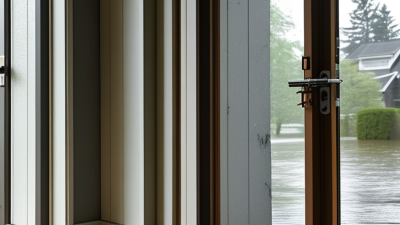
Choosing a flood barrier for home protection is not a simple price comparison. Homes face different threats. A basement may need a doorway shield, while a coastal property may require a wider perimeter system. Door width, water depth, storage space, installation time, and local drainage all matter.
Gilbert F. White, a leading flood-policy expert, observed, “Floods are acts of God, but flood losses are largely acts of man.” His words remain relevant when evaluating China-based manufacturers. A reliable supplier should explain test methods, materials, sealing performance, warranty limits, and replacement procedures. Buyers should also request clear product drawings and installation instructions. Attractive photographs are not enough.
This guide examines China Top Flood Barrier for Home Manufacturers through practical criteria. It considers aluminum panels, removable doorway barriers, inflatable systems, and modular flood walls. Field experience matters. A barrier that performs well in a controlled test may fail when the ground is uneven or debris blocks the seal. That weakness deserves attention.
No barrier guarantees complete safety. Not even close.
Manufacturers should provide evidence, not vague promises. Independent testing can strengthen confidence, but buyers must check what the test actually measured. Was the water shallow or deep? How long did exposure last? Did the system protect a real doorway?
The strongest companies combine engineering knowledge with responsive support. They help customers select the right size, prepare the opening, and maintain seals before storm season. This article aims to identify those qualities while recognizing one uncomfortable truth: product rankings can change as testing, materials, and after-sales service change.
Types of Home Flood Barriers Manufactured in China
China Top Flood Barrier for Home Manufacturers
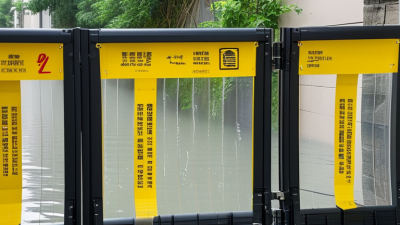
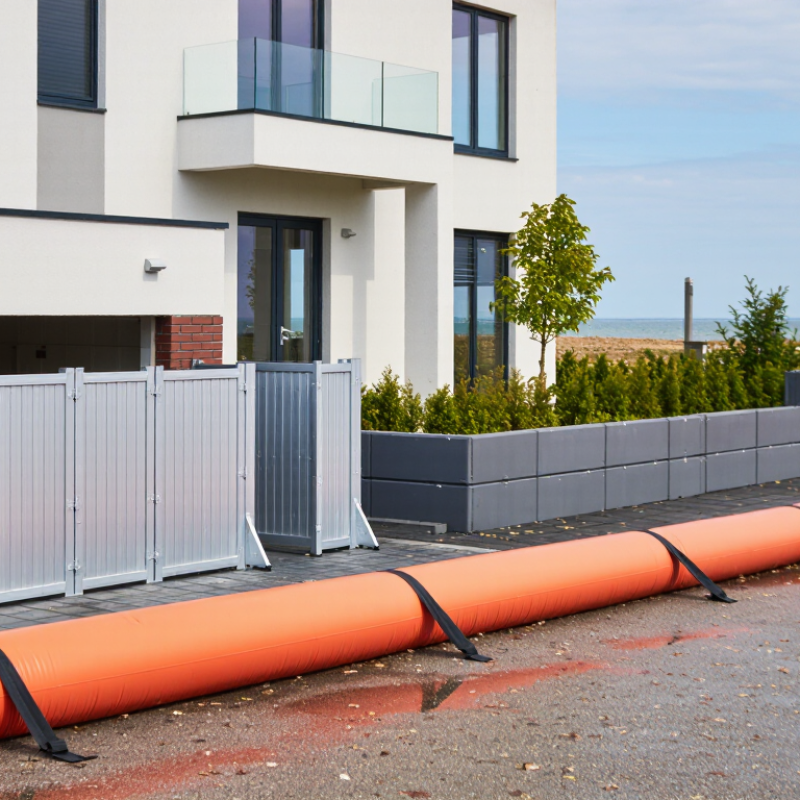
Home flood barriers made in China now cover several practical designs. Removable aluminum panel systems fit doorways and garage openings. They use side tracks, compression seals, and adjustable heights. Their clean installation suits tiled entrances and low thresholds.
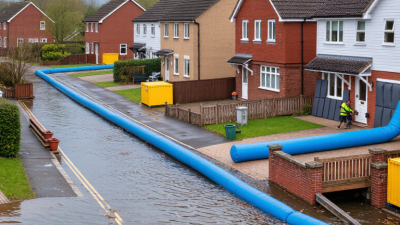
Water-filled tubes offer faster deployment around driveways and small courtyards. Inflatable barriers provide lighter storage, but punctures remain a concern. Absorbent barriers are easy to carry and useful for minor seepage. They are not ideal for deep, fast-moving water. Modular steel or aluminum barriers handle stronger pressure, although they need careful anchoring and more storage space.
Flood choice should follow measured water depth, flow speed, opening width, and warning time. The UNDRR Global Assessment Report 2022 states that floods represented 44% of reported disasters from 2000 to 2019. The WMO State of the Global Climate 2023 also recorded record global mean sea level. These findings support better household preparation, but they do not replace site testing. A catalog rating can mislead if seals age or foundations shift. Manufacturers should test assembled barriers, not only individual panels, using repeatable pressure and leakage checks. Chinese production can offer flexible dimensions and competitive fabrication, yet quality control must remain visible. A barrier is only as reliable as its weakest joint.
Key Materials and Structural Design Features
For home flood barriers manufactured in China, material selection determines durability, weight, and maintenance needs. Marine-grade aluminum offers a strong frame without excessive handling difficulty. Galvanized steel provides higher impact resistance, but it needs careful coating inspection. Flood panels often use reinforced PVC, rubber composites, or corrosion-resistant metal sheets. Each option behaves differently under sunlight, saltwater, and repeated installation.
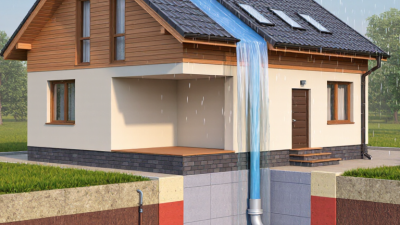
A dependable barrier needs more than thick panels. Interlocking sections should limit water paths at every joint. EPDM or silicone seals can remain flexible during temperature changes. Anchoring plates must transfer pressure into sound concrete, not cracked paving. A practical design also includes adjustable braces and visible locking points. Small gaps matter. Water finds them quickly.
Field installation experience shows that drainage conditions can change performance dramatically. Before ordering, measure door widths, floor levels, nearby drains, and wall strength. Ask manufacturers for material specifications, load calculations, installation drawings, and documented testing methods. Independent inspection is useful when project risks are high. Still, laboratory results cannot replace a site trial. A barrier may perform well on a level surface yet leak beside an uneven threshold. Regular seal replacement and bolt checks should be planned. The design may need improvement after its first serious storm.
Manufacturing Processes and Quality Control Standards
China Top Flood Barrier for Home Manufacturers
Manufacturing Processes and Quality Control Standards
Reliable home flood barriers begin with controlled material selection. Manufacturers commonly inspect aluminum profiles, stainless-steel parts, rubber seals, and fastening components before production. Each material should match approved technical specifications and local building requirements. Moisture-resistant seals need stable compression after repeated installation. Small differences can cause serious leakage.
A practical manufacturing process includes cutting, drilling, welding, surface treatment, and final assembly. Computer-controlled cutting improves dimensional accuracy. Skilled workers still inspect corners and joints by hand. Every barrier should receive a water-pressure test that represents realistic flooding conditions. Inspectors check leakage, deformation, locking strength, and removal time. Batch records should connect finished products with raw materials and operators.
Quality control should follow a documented management system, such as ISO 9001 principles, with calibrated measuring tools and traceable inspection records. Independent laboratories can verify material strength and water resistance. Factory audits should also review worker training, storage conditions, and corrective actions. No factory is perfect. A clean test result may hide weaknesses in repeated use, uneven floors, or rushed installation. Manufacturers should test those uncomfortable situations and record failures honestly. That practice builds more reliable protection for households.
How to Evaluate Chinese Flood Barrier Manufacturers
China Top Flood Barrier for Home Manufacturers
Choosing a Chinese flood barrier manufacturer requires more than comparing prices and product photos. The UNDRR’s Human Cost of Disasters report recorded 7,348 disaster events from 2000 to 2019, causing nearly 1.23 million deaths and about US$2.97 trillion in losses. Flood protection is not a decorative purchase. Ask for hydrostatic pressure test results, material certificates, dimensional tolerances, and installation instructions. Independent laboratory evidence matters more than a sales claim.
Factory assessment should include production records, incoming material checks, weld inspection, and batch traceability. ISO 9001 certification can show process control, but it does not prove that a barrier performs well in real floodwater. Request videos and test reports showing seals under pressure, uneven floors, door thresholds, and repeated assembly. Small gaps can become serious leaks. Do not guess.
The World Meteorological Organization’s State of the Climate in Asia 2023 reported that floods and storms represented 79% of reported disasters in the region. This supports evaluating products for local rainfall, drainage, and installation conditions. A reliable manufacturer should explain anchoring loads, replacement parts, warranty limits, and response times in writing. Check whether instructions are clear enough for a homeowner at night. That detail is often overlooked. Some evaluations may still miss site-specific risks, so a physical inspection and pilot installation remain valuable before larger orders.